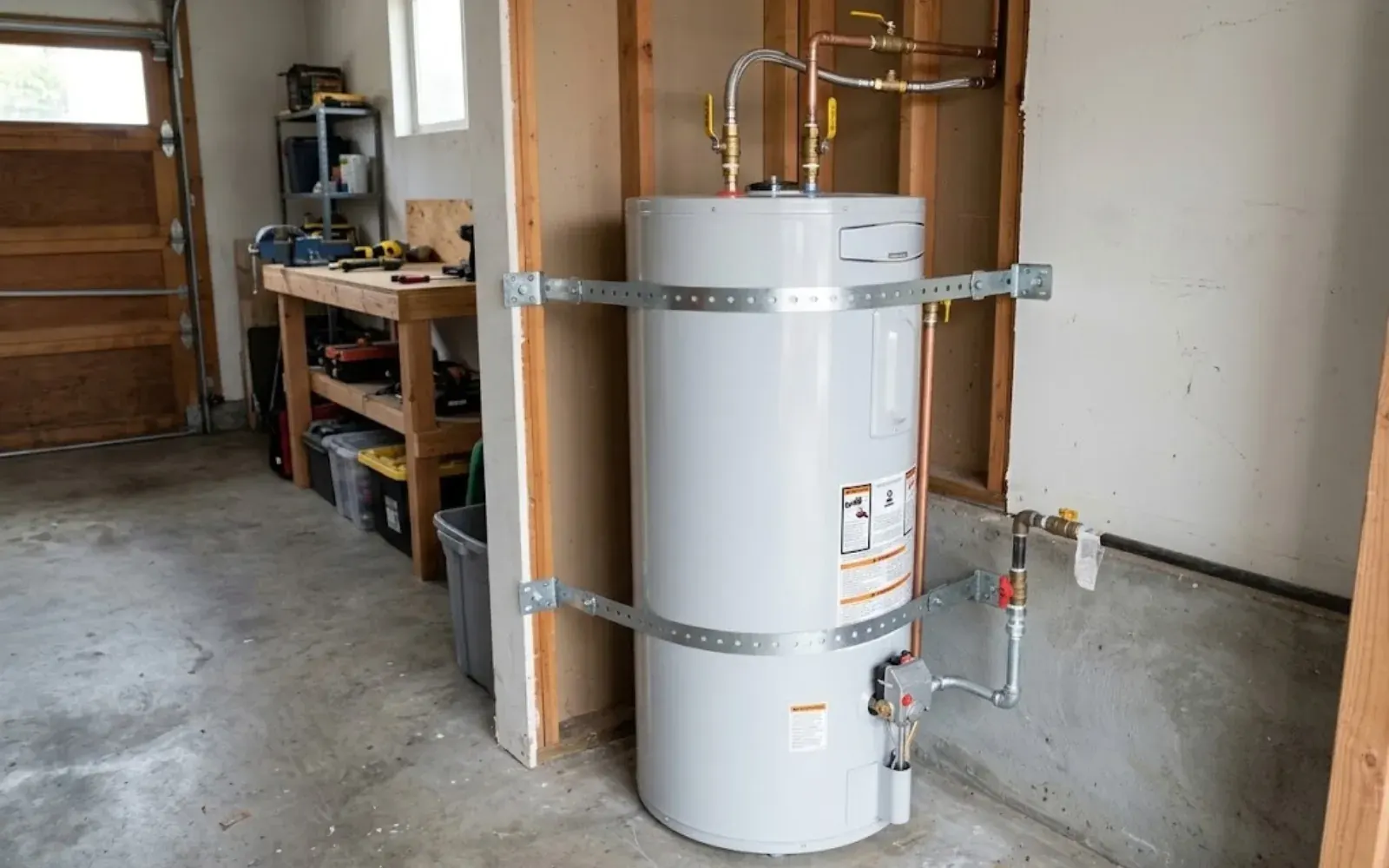
Water heater installation in Woodburn, OR is the planned version of a swap: you pick the size, fuel and location before anything breaks. That means no cold showers while you wait for parts, and time to compare a standard tank with a heat pump or tankless unit. Our licensed plumbers handle the plumbing, venting, electrical hookup and the permit as one job.
This page is for jobs you can schedule, such as a new home, a remodel, a moved heater or a fuel change. If your tank is already leaking, go to emergency replacement and call the 24/7 line. If you are still deciding, the notes below cover the choices that most affect cost and comfort.
Sizing a tank to your household
Tank size is a balance between peak demand and floor space. Capacity is only part of it, since the first-hour rating tells you how much hot water the unit delivers in a busy hour.
| Household | Typical tank size | Notes |
|---|---|---|
| 1 to 2 people | 30 to 40 gallons | Fits closets and small utility rooms |
| 3 to 4 people | 40 to 50 gallons | The common choice for a family home |
| 5 or more people | 50 to 80 gallons | Check the first-hour rating and the doorway width |
| Large soaking tub | Larger or two units | Tub volume drives the size more than headcount |
A plumber confirms the match on site. Woodburn's average household is about 2.9 people, so a 40 or 50 gallon tank is a frequent fit.
Venting for gas and condensing units
A gas water heater must carry exhaust out of the house. Atmospheric units rely on a chimney or B-vent that slopes upward and drafts naturally, while power-vent and condensing models use a fan and plastic pipe through a wall or roof. Changing from one to the other, or rerouting a vent from an old chimney, changes the parts list and the price.
Combustion air matters too. A heater in a tight closet needs enough air to burn cleanly, and the Oregon Building Codes Division flags combustion air among the points a building official may review when a heater is replaced in an existing home. Electric and heat pump units skip the flue, but heat pump units need open space and airflow around them.
Expansion tank and relief valve
Why heating water pushes back
Water expands when heated. In a closed system with a backflow device or pressure reducing valve, that extra volume has nowhere to go, and pressure spikes.
What an expansion tank does
A small tank with an air cushion absorbs the extra volume. Without it, the relief valve may drip and fixtures wear faster.
Relief valve discharge
The valve needs a discharge pipe that ends in a safe spot, not capped. Building officials look at this closely.
Pressure check
We measure house pressure at an outside spigot or the heater. High pressure is a reason to add or replace a regulator.
Where the heater goes
A garage install usually calls for raising the burner off the floor in gas units, and seismic strapping to keep the tank upright. The Oregon BCD's interpretation for existing buildings lists both, along with relief valve termination, as items an official may consider. Basements and crawlspaces need a drain path and a pan.
Woodburn has about 7.3 percent mobile homes, and manufactured homes often have a closet-style heater with limited clearance. Rental units, about 36 percent of households, bring landlord and tenant questions on who pays. Measure the space, door and any stair before you buy, because a tall unit may not fit where the old one did.
Installation day, start to finish
- 1WalkthroughWe confirm size, vent route, fuel connection and where the drain will end.
- 2Shut off and drainThe old tank is emptied and removed, and new shutoffs go on the supply lines.
- 3Place and connectThe new heater is set level, strapped where required and connected with flex lines, a relief valve and a discharge pipe.
- 4Fuel, vent and expansionGas gets a leak test and vent check. An expansion tank goes on when pressure calls for one.
- 5Fill, test and inspectThe tank fills with all hot taps open to purge air, then runs a heat cycle. Marion County inspects the permitted work.
Permit through Marion County
In Woodburn, plumbing permits and inspections are handled by Marion County, with the city's design standards page pointing builders to the county for electric and plumbing. Oregon BCD requires a permit for water heater replacement, and a licensed contractor may use a minor label. Installing a brand-new heater in a remodel can involve more than a label, so permit rules vary and are confirmed with the county for your address.
Plumbing work needs both a CCB license and a BCD plumbing contractor license, and homeowners can check either on state search pages. Skipping the permit can complicate a home sale or an insurance claim.
What shapes an installation price
A clear price comes before work starts, and these factors set it:
- Tank capacity and efficiency, or a heat pump or tankless choice
- Gas line, venting and electrical upgrades
- Distance from the old plumbing and the room's access
- Expansion tank, pan, strapping and code-driven extras
- Permit fees and haul-away of the old unit
Angi and HomeAdvisor list national ranges of about $600 to $2,500 for tank installs, which are not Woodburn prices. Call (503) 974-3329 to describe your house, and we will work out the number together.
Related work and nearby towns
Many installs go hand in hand with new supply lines, so see plumbing installation and repiping if your galvanized pipes are tired. For a no-storage option, compare tankless water heaters. We also schedule installs in Silverton, about 11 miles from Woodburn.
Water Heater Installation questions, answered
Many tank installs take a half day to a full day, depending on venting and electrical needs. Fuel changes or a relocated heater take longer.
Yes. Relocation means new water, drain, gas or electric runs, and often a new vent. We price it separately from a swap.
Often you do, especially if your house has a pressure reducing valve or a backflow device that closes the system. We test pressure and tell you.
Yes. The space needs open air, a condensate drain and a suitable circuit. We check those before recommending one.
Most people stay with the same size. Step up if you often run out, and look at the first-hour rating on the label.
We do. Marion County issues plumbing permits for Woodburn addresses, and inspections happen after the work.
Dealing with water heater installation trouble right now? A person answers the line any hour.
Call (503) 974-3329Plumbing work in Oregon is governed by the Oregon Plumbing Specialty Code, which is built on the Uniform Plumbing Code (UPC). Ask any plumber which edition and permit rules apply to your job.