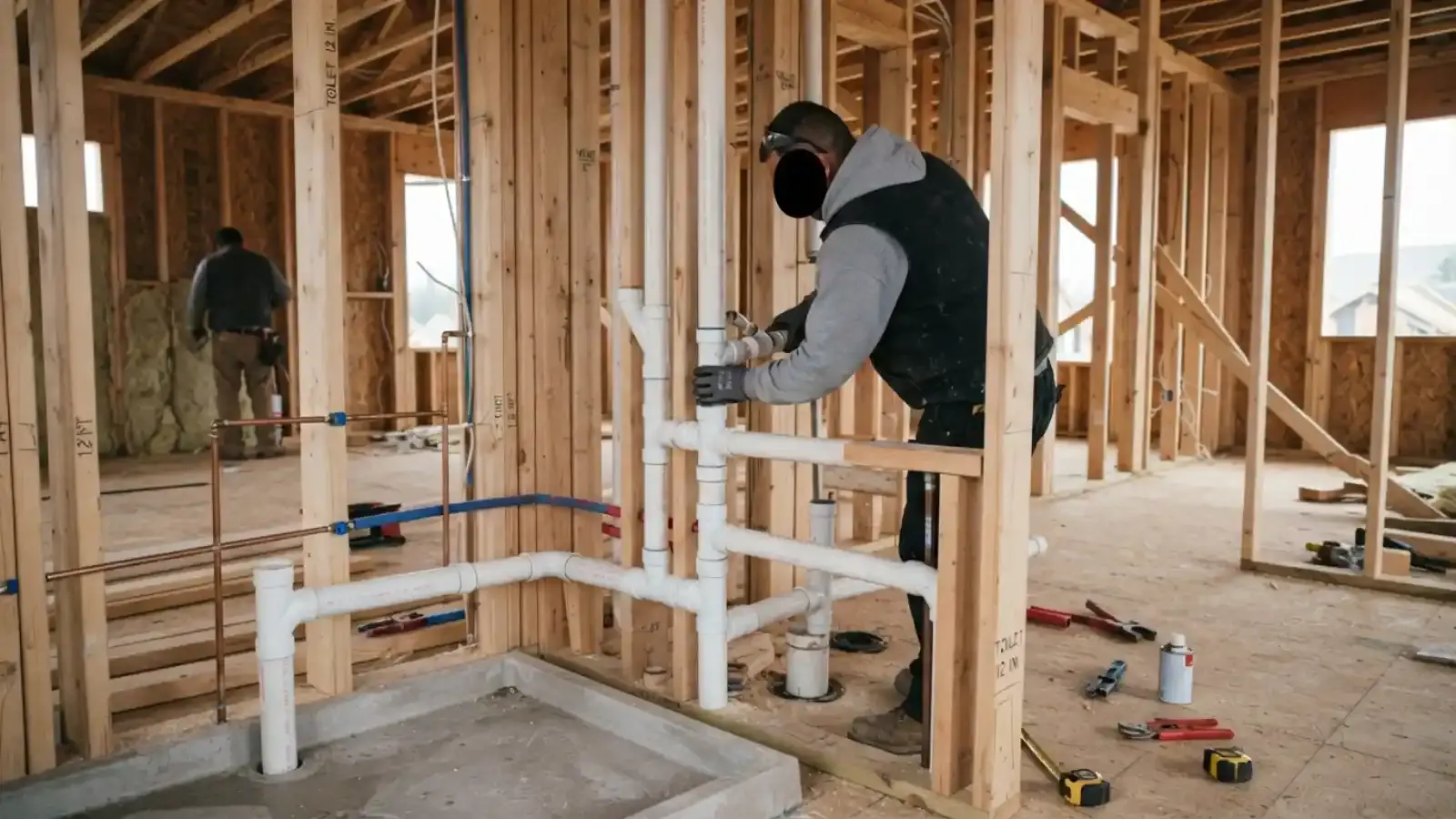
Plumbing installation in Woodburn, OR is the work of adding or moving water and drain lines and connecting new fixtures. That includes a bathroom remodel, a new shower or tub, a kitchen sink move, a washer hookup or a build with nothing roughed in yet. Our licensed plumbers install it, check it and pull the permit when one is required.
Much of the work in town is remodeling, since the median Woodburn home was built in 1978 (ACS 2020-2024). Older layouts often put the supply and drain lines where a new design does not want them. A short site visit settles what can stay, what moves and what the inspector will want to see.
What we install
Showers, tubs and valves
New or replacement showers, tub and shower combinations, pressure-balance valves and drains. Jetted tubs need a separate pump and electrical check.
Sinks, toilets and faucets
New bathroom and kitchen sinks, traps and supply stops, toilets and faucets. Older metal traps are often swapped for modern ones.
Appliance hookups
Washers, dishwashers, ice makers and gas range connections. Gas work follows its own safety rules.
Supply and drain lines
PEX or copper supply, PVC or ABS drain and vent runs, shutoffs and new branch lines.
Remodel rough-in
Moving a toilet or tub, adding a basement bath, or opening a wall for a kitchen redo.
New construction
Rough-in and finish work for new homes, additions and accessory units.
Remodel rough-in: what happens behind the walls
Rough-in is the pipework installed before drywall and flooring go up. We set supply lines, drains, vents and shutoff valves at the exact locations the fixtures need. Everything is pressure tested and inspected while it is still open.
Moving a toilet is the classic example. Its drain is large and must slope, so a few feet can mean opening the floor and running a new vent. We explain that before you tile, since changing a layout after the fact costs far more. If you are also swapping old pipe, repiping during a remodel saves opening walls twice.
How a plumbing installation job runs
- 1Walk the spaceWe look at the existing supply, drain and vent routes, the shutoffs, and where the fixtures go.
- 2Written scope and priceYou get the scope and a clear price before work starts. Changes are agreed in writing.
- 3Permit if requiredWe confirm with Marion County whether your project needs one. We pull it when it does.
- 4Install and testLines are run, secured and pressure tested. Fixtures are set and checked for leaks.
- 5Inspection and closeoutA county inspector reviews permitted work. We leave you shutoff locations and any care notes.
Permits and the code in force
Plumbing permits and inspections inside Woodburn go through Marion County, not the City. Oregon's Building Codes Division lists permits as required for altering piping inside walls, ceilings or floors, relocating plumbing in remodels and plumbed water features. It also requires one for water heater replacement, which we cover under water heater installation.
The same BCD page lists no permit for replacing a sink, toilet, exposed faucet, showerhead or hose bibb, or for installing a water filter. Project details can change that, so confirm with Marion County before you start. State rules say plumbing work needs a required permit before it begins.
The code in force is the 2023 Oregon Plumbing Specialty Code, effective October 1, 2023, based on the 2021 Uniform Plumbing Code. Vent size, trap arms, fixture spacing and drain slope all come from it.
Hiring a plumber for installation: license check
Oregon requires both a CCB contractor license and the appropriate BCD plumbing contractor license for plumbing work. You can look up a contractor on the state's BCD and CCB license searches. We are licensed and insured, and you are welcome to verify any plumber before they open a wall.
Unpermitted work can cause trouble when you sell or file a claim, and an insurer may question damage from work that never passed inspection. A permit protects you as much as it protects the code.
PEX, copper and PVC: what goes where
| Pipe | Use | Notes |
|---|---|---|
| PEX | Hot and cold supply | Flexible, quick to route in remodels, needs protection from sunlight. |
| Copper | Supply and exposed runs | Durable. Costs more and takes more labor to install. |
| PVC or ABS | Drains and vents | Used for waste lines. Material choice depends on code and the inspector's reading. |
| Galvanized steel | Not for new work | Existing galvanized is usually replaced in a larger remodel. |
Angi and Bob Vila report national costs of about $0.40 to $2 per foot for PEX and $2 to $8 per foot for copper, before labor.
Builders, contractors and new construction
General contractors, developers and homeowners planning an addition can ask us about rough-in and finish plumbing for new homes, additions and larger remodels. Larger jobs with a bid process start with plans, fixture counts and a schedule. Call (503) 974-3329 to talk through the scope. For restaurants, shops and other business work, see commercial plumbing.
What drives installation cost
Installation prices vary a lot because no two houses are alike. We give a clear price before work starts, and these factors set it:
- The number and type of fixtures, and whether you supply them.
- Whether lines move or stay in place.
- Access: open framing versus finished walls and floors.
- Pipe material, and any permit and inspection fees through Marion County.
- Whether old supply or drain lines must be replaced to connect cleanly.
Insurance does not cover planned installation, though a covered loss can include replacing fixtures damaged in a leak. Call (503) 974-3329 for a clear price on your project.
Plumbing Installation questions, answered
Oregon's BCD list shows no permit for replacing a toilet, sink, exposed faucet or showerhead. Moving the plumbing or altering pipe in walls does need one. Confirm the details with Marion County.
Washer boxes and shutoffs, yes. Gas connections must be leak tested and follow their own rules. If you smell gas, leave the home and call the gas utility.
Yes. Worn metal traps and corroded stops are common finds during a fixture swap. Replacing them at the same time costs little extra and prevents leaks.
Usually. Check that the fixture matches the rough-in and that the shower valve is compatible. We can advise before you buy, since returns on opened items are hard.
Both are standard remodel jobs. A basement bath may need a sewage ejector pump if the drain sits below the main line. We review the route during the walk-through.
Dealing with plumbing installation trouble right now? A person answers the line any hour.
Call (503) 974-3329Plumbing work in Oregon is governed by the Oregon Plumbing Specialty Code, which is built on the Uniform Plumbing Code (UPC). Ask any plumber which edition and permit rules apply to your job.