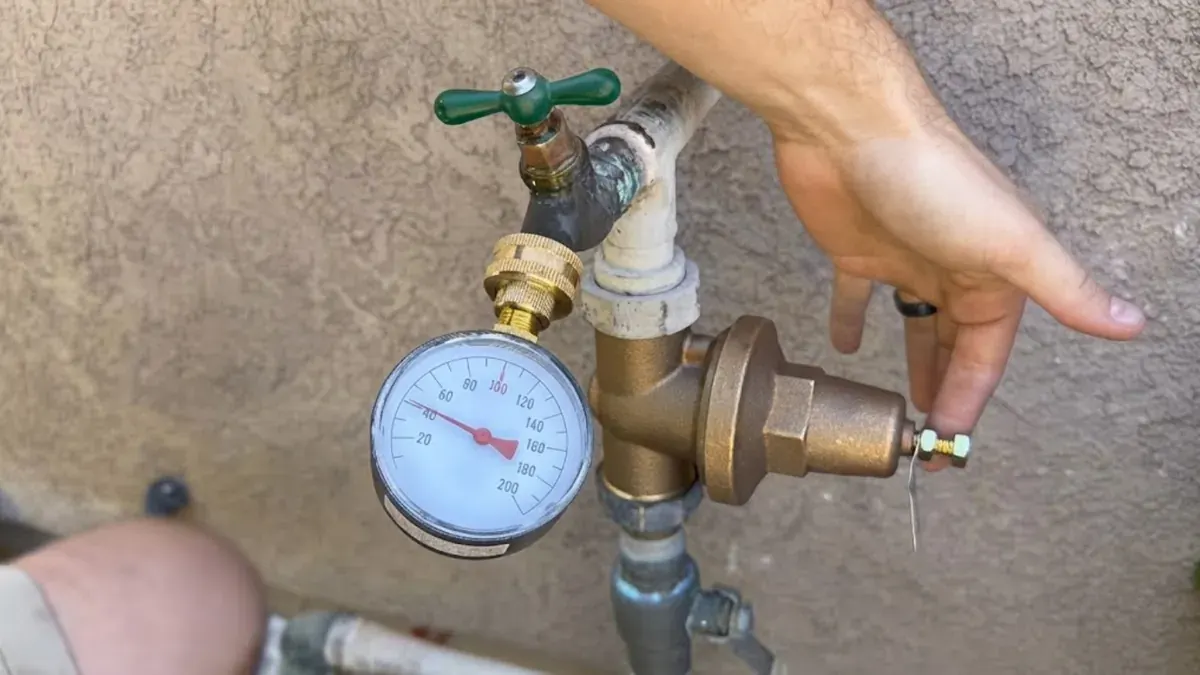
A whole-house leak detection system is a device on your main water line that tracks how much water moves through the pipe. If the pattern looks like a leak, such as a slow trickle that never stops or a sudden surge, it alerts your phone. Some models also close a motorized valve to stop the flow. For Woodburn, OR homes, it is a safety net that works around the clock, even when nobody is home.
It is not a replacement for finding and fixing the leak. The device tells you something is wrong, and a plumber finds where. Below we cover the main types, what they cost to think through, what they cannot do, and a free way to do a basic check yourself with your water meter.
Three common types of leak protection
| Type | How it works | What to know |
|---|---|---|
| Flow monitor | Clamps on or sits in the main line and reads flow rate | Alerts you, but you close the valve yourself |
| Smart shutoff valve | Motorized valve on the main, often paired with a flow sensor | Can close automatically when flow looks like a leak |
| Point sensors | Small pucks that detect water on the floor | Catch spills at the water heater, washer or under a sink, but only where placed |
Features differ by brand. Before buying, read the product's installation requirements and ask your plumber which fits your main line.
How a flow monitor decides something is wrong
Most systems learn your household's normal pattern over a week or two. Showers, dishwasher cycles and laundry make a signature. A constant low flow overnight, when nobody uses water, stands out clearly.
That constant flow is the classic sign of a leaking toilet flapper, a dripping supply line or a pinhole in a buried pipe. A sudden high-volume flow that does not stop looks like a burst pipe, and a smart valve can respond in seconds.
- Small slow leaks: flagged after a time delay, since normal use can look similar for a short while.
- Large bursts: flagged quickly, and the valve closes if set to do so.
- Away mode: lets you set a stricter rule while you travel.
How a monitor differs from a plumber's leak detection visit
A monitor answers one question: is water leaving the system when it should not be? A plumber answers a different one: where is it going and what is broken? That takes tools like acoustic listening gear, pressure testing and moisture readings, plus the judgment to read the results.
Use both. The device can catch a problem at 2 a.m. and cut the damage. The visit finds the cracked fitting, repairs it and checks nothing else is failing. Our leak detection service picks up where the alert leaves off.
Check your meter yourself in ten minutes
This works with or without a smart device, and it is the quickest way to tell if water is moving when it should not be. The meter box is usually in the ground near the street.
- 1Turn everything offClose all taps, stop the dishwasher and washer, and make sure no one flushes a toilet. Shut off the ice maker and any irrigation if you can.
- 2Open the meter lid carefullyLift the cover with a screwdriver, watching for spiders and mud. Keep your hands out of the box beyond that.
- 3Find the leak indicatorMany meters have a small triangle, star or dial that spins at the slightest flow. Even a slow spin means water is moving.
- 4Record the reading, wait, and check againWrite down the numbers, wait 30 minutes with no water use, and look again. A change means a leak somewhere on your side of the meter.
- 5Narrow it downClose your home's main valve and watch the indicator. If it stops, the leak is inside the house. If it keeps spinning, the leak is on the line between the meter and the house.
Woodburn local note: shutoff, meter and service line responsibility
The City of Woodburn runs the public water system, and its guidance tells homeowners to know where their shutoff valve is. The Water Section can shut water off at the meter if needed.
For a leak on a customer service line, the City lists its Finance Department at 503-982-5222 option 1. The drinking water line for questions about the system is 503-982-5380.
The City's lead service line inventory counted 7,709 lines, and many customer-side lines are galvanized steel. That is the part of the pipe a homeowner is responsible for.
What these devices cannot do
Knowing the limits keeps you from relying on the box more than you should.
- They cannot find a leak on the drain side. A leaking drain or sewer pipe does not pass through the supply main, so the monitor stays quiet.
- They cannot see a very slow seep if it falls below the sensitivity setting.
- They do not replace a pressure check, a camera inspection or a repair.
- They need power and a Wi-Fi or cellular connection to alert you. In an outage, check how your model behaves.
- A valve that closes also cuts water to everything, including the fire sprinklers in some buildings, so confirm before installing in a building with a sprinkler system.
Should you install one? Cost factors to weigh
We do not have a verified price range for leak detection or for these devices, so we will not quote one. What we can say is what changes the bill. The unit itself varies by brand and feature set. Installation depends on how the main enters your house and whether there is room for the valve.
Plumbing work may need a permit when it alters piping. Ask Marion County whether a given install does, since permit rules vary. If you also plan to fix a failing shutoff or add fittings, plumbing installation covers that work.
- Unit type and features
- Pipe size and material at the install point
- Whether a new main shutoff is needed
- Electrical outlet access nearby
- Permit and inspection costs if they apply
Call (503) 974-3329 and we will talk through your setup. You get a clear price before work starts.
Who benefits most in our area
Second homes, rentals and anyone who travels benefit most, since a leak can run for days unseen. Homes with the water heater in a closet or garage, and houses with finished basements or ceilings below bathrooms, have the most to lose.
If you live in Gervais or Mount Angel on a property with a long run of buried pipe between the meter and the house, a hidden line leak is a real risk. A flow monitor can flag the loss even when nothing shows on the surface. If the alert is a surprise, burst pipe repair is the call to make.
Insurance rules vary, so ask your agent whether a shutoff device affects your policy or discounts.
Questions about this topic
It depends on the model. Some have battery backup and some fail in their last position. Read the specs and test what happens when you pull power.
It will tell you water is flowing when it should not be, which is the first step. Locating the exact spot still takes listening equipment or pressure testing from a plumber.
A quick no-use check every few months is plenty, plus any time your bill jumps. If you travel often, do one before you leave.
The City lists its Finance Department at 503-982-5222 option 1 for customer service line leaks. We can then locate the break and plan the repair. Confirm the number on the city site because it may change.
They complement each other. The manual valve is still your backup, so make sure it turns freely. A valve that has not moved in years can seize, and a plumber can replace it.
Dealing with this at home right now? Call any hour and a person picks up.
Call (503) 974-3329Guidelines here are general. The Oregon Plumbing Specialty Code, based on the UPC, and the manufacturer's instructions decide what is allowed on your job.