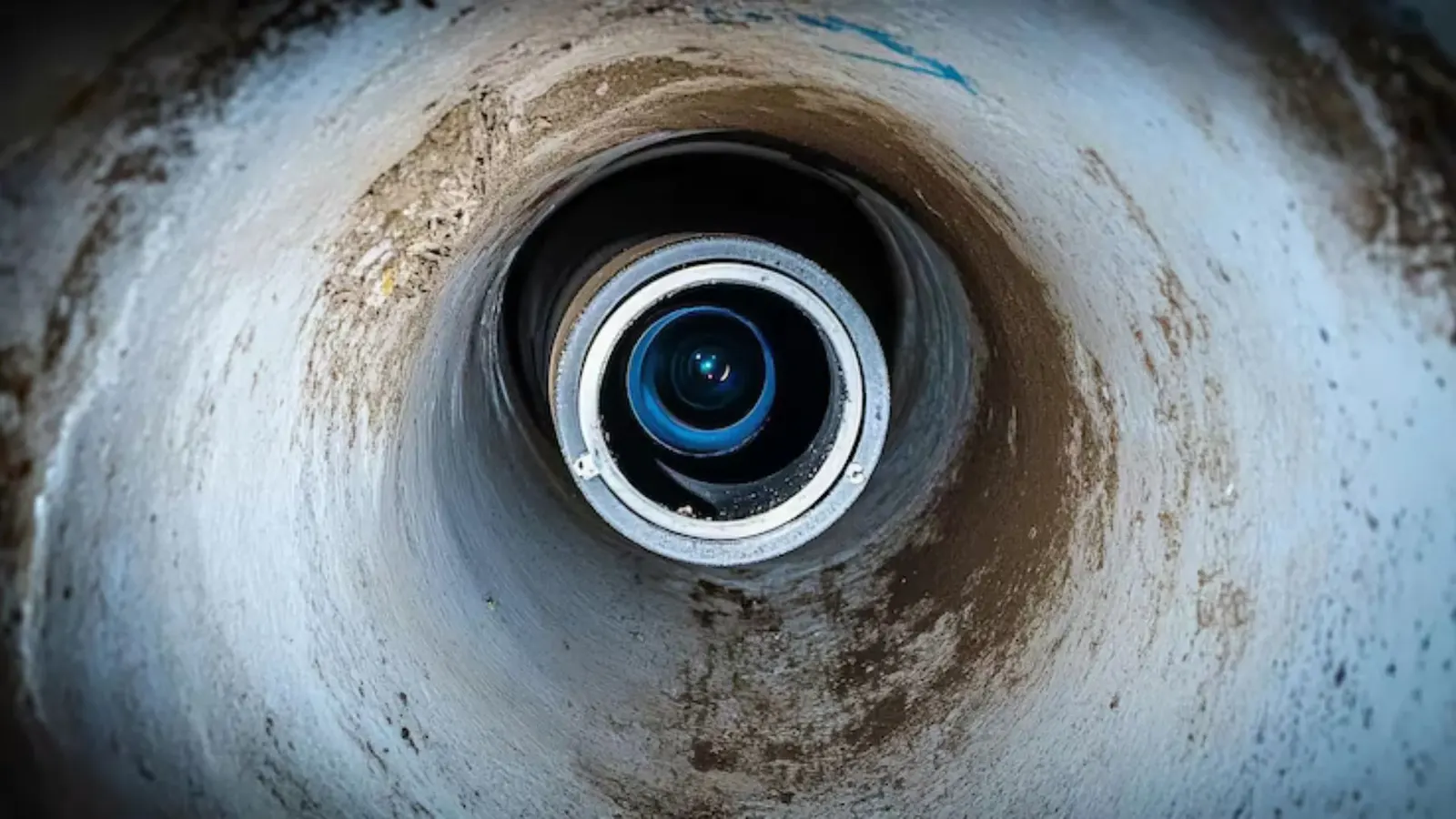
Trenchless sewer pipe lining is a repair that builds a new pipe inside your old one. A crew feeds a resin-soaked tube into the damaged sewer line, expands it against the pipe wall, and lets it harden. In most cases that means one or two small access holes instead of a trench across the lawn, the driveway or the flower beds.
For Woodburn, OR homeowners the real question is whether your line is a good candidate. Lining works well on cracks, open joints and root entry. It does not rescue a collapsed pipe or a sag that holds water. The rest of this guide shows how to tell the difference and what to ask before you agree to any quote.
How the lining process works
The tube is usually felt or fiberglass, soaked in epoxy resin. It is pulled or inflated into place, then pressed outward against the old pipe. Heat, steam or ultraviolet light cures the resin into a hard, smooth shell. Plumbers call this cured-in-place pipe, or CIPP.
The finished liner has no joints for roots to find. Its inside wall is smooth, so paper and waste slide through more easily than they did through rough cast iron or cracked clay. The trade-off is a slightly smaller inside diameter, which matters little on most house laterals.
- A camera inspection first, so the crew sees every crack, offset and root mass.
- Cleaning the pipe with a cable or hydro jetting so the liner bonds to bare pipe wall.
- Inserting and curing the liner, which often takes several hours depending on length and method.
- Cutting reopened holes where branch lines join, then a final camera pass to confirm the result.
Cleaning is not optional. A liner pressed over scale or a root ball will wrinkle or leave gaps, and a poor install can fail early.
Signs your sewer line may need attention
None of these prove you need lining. Each one is a reason to book a camera look before the problem turns into a backup.
- A main drain that clogs again within weeks of being cleared
- Gurgling in a tub or toilet when the washer drains
- A sewer smell near a cleanout, a floor drain or the yard
- A soft, sunken or unusually green patch of lawn over the line
- Slow drains in every bathroom at once, not just one sink
- Recent roots in the line, which tend to come back every year or two
Lining, bursting or digging: how the options compare
Each method has a place. The camera picture decides which one fits your pipe, not a sales preference.
| Method | Best for | Main limit |
|---|---|---|
| Pipe lining (CIPP) | Cracks, open joints, root entry, light corrosion | Cannot fix a collapse or a belly that holds water |
| Pipe bursting | Pipe too far gone to line, or a fully collapsed section | Needs entry and exit pits, and nearby utilities must be located |
| Open trench replacement | Short runs, bellies, or repairs under easy-to-restore ground | Digs up lawn, paving or landscaping, so restoration adds cost |
| Spot repair | One damaged section with solid pipe on both sides | Does not stop new cracks or roots elsewhere on the line |
A belly is a low spot where the pipe has settled and water pools. Camera footage shows it, and a liner follows the dip rather than correcting it.
Why older Woodburn houses come up in this conversation
Pipe age is the main reason lining gets discussed. In Woodburn, about 55 percent of homes were built before 1980, and the median home was built in 1978. Sewer laterals from that era were often clay tile, cast iron or a fiber material called Orangeburg that softens and deforms over time.
So what does that mean for you? If your house sits in the 1960s and 1970s group, ask for the camera footage and have the pipe material named. Orangeburg in particular often deforms, and a badly deformed pipe may be a bursting or replacement job rather than a lining job.
Homes in the nearby towns of Gervais and Hubbard run on their own city sewer systems, and some rural parcels outside town limits are on septic instead. A septic line is a different animal, so tell the plumber which system you have before they quote anything.
What to do before you call anyone
A few minutes of homework makes the first visit faster and the quote clearer.
- 1Find your cleanoutLook for a capped pipe, usually 3 or 4 inches wide, near the foundation, in the garage or in a yard box. Do not open it if the line is backing up, because sewage can flow out.
- 2Note the patternWrite down which drains are slow, how often it happens and whether rain or laundry day makes it worse. This helps the plumber decide where on the line to look first.
- 3Check for past workFind any receipts, camera videos or permits from earlier repairs. A prior liner or patch changes the plan.
- 4Stop what feeds the clogSkip wipes, grease and caustic drain openers while you wait. Chemical cleaners eat at old pipe and are hard on anyone who works on the line afterward.
- 5Call and ask for a camera lookCall (503) 974-3329 and describe the symptoms. A camera pass shows whether lining, bursting or a spot repair makes sense.
Woodburn local note: sewer service and who handles permits
The City of Woodburn runs a wastewater treatment plant at 2815 Molalla Rd, and that plant discharges to the Pudding River under a state permit. The city side of the system ends at the public sewer, while the pipe from your house to that main is the part you or a plumber deal with.
Plumbing permits and inspections inside Woodburn go through Marion County, not the City. Whether a particular lining job needs a permit depends on the scope, so ask Marion County before work begins.
On housing age, Census figures put Woodburn's median year built at 1978, with about 5,439 of 9,894 housing units built before 1980.
What lining costs: national ranges and what moves the price
Bob Vila, citing HomeAdvisor data, lists sewer lining at about $80 to $250 per foot, pipe bursting at about $60 to $200 per foot, and a camera inspection at about $100 to $500. HomeAdvisor puts overall sewer line repair or replacement at roughly $1,388 to $5,323 nationally. These are national figures, not Woodburn quotes and not our prices.
Quick math shows why the range is wide. A 40 foot lateral at those per-foot lining rates lands in the thousands, and a longer or deeper run costs more. Several things push a real price up or down:
- Length of pipe and how deep it runs
- Pipe diameter and material
- How much cleaning or root cutting is needed first
- Whether a cleanout must be added for access
- How many branch connections have to be reopened
- Any permit or inspection fees through Marion County
You get a clear price before work starts, and the camera footage backs up the scope. Call (503) 974-3329 and we can walk through your situation.
When lining is the wrong call
A liner only works if the host pipe still has its shape. A collapsed section, a major offset where two pipes have separated, or a belly full of standing water usually calls for bursting or replacement. A tree root that has crushed the pipe from outside is another red flag.
Be wary of any pitch that skips the camera step. If the quote does not come with video of your own pipe, you are being sold a method, not a diagnosis. For a second opinion on a line, see our sewer inspection page, and if the line is already backing up, our sewer line repair team handles those calls around the clock.
Questions about this topic
Manufacturers and installers often cite a design life of several decades for a properly installed liner. That figure depends on how well the old pipe was cleaned and how the liner was cured. Ask for the warranty terms in writing and keep the final camera video.
No. Water down the line during curing can ruin the liner, so expect to stop using sinks, toilets and the washer for several hours. Plan that window with the crew ahead of time.
A sealed liner removes the joints and cracks that roots enter through, so it blocks most new growth into the pipe. Roots can still press on the outside of the pipe, and the joint where the liner meets the old pipe or the city main deserves attention in the camera report.
Plumbing permits in Woodburn are issued by Marion County, and the right answer depends on the scope of the work. Ask the county before the job starts, and ask your plumber who pulls the permit and schedules the inspection.
Not necessarily. Age raises the odds of clay, cast iron or Orangeburg, but plenty of older lines are fine and many newer ones are not. The only way to know is a camera inspection of your own pipe.
Dealing with this at home right now? Call any hour and a person picks up.
Call (503) 974-3329Guidelines here are general. The Oregon Plumbing Specialty Code, based on the UPC, and the manufacturer's instructions decide what is allowed on your job.