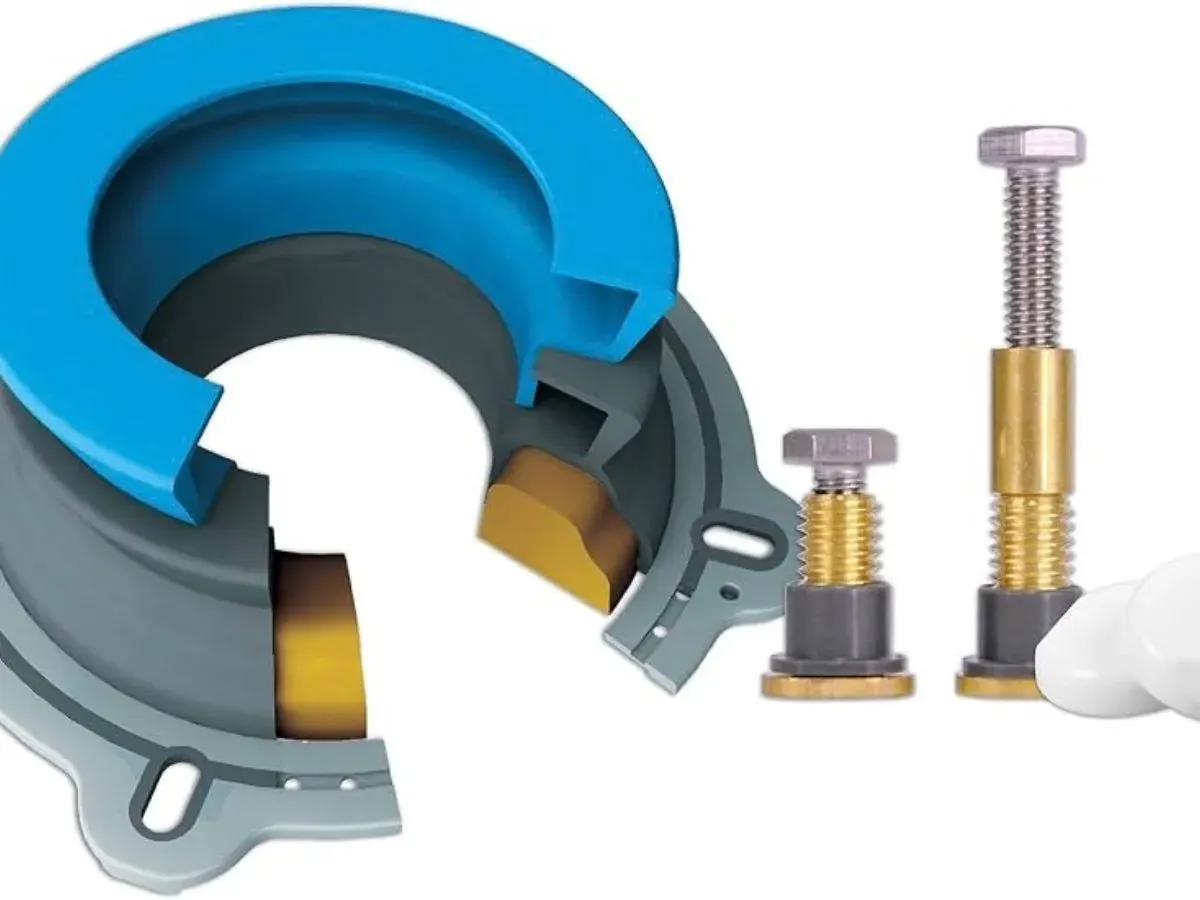
Toilet flange bolts, also called closet bolts, are the two bolts that hold a toilet to the floor flange. They slide into slots on the flange ring, stand up through the holes in the toilet base, and a nut and washer on each one pull the bowl down against a wax ring. Installing them takes about 30 minutes if the flange is in good shape.
This guide covers the tools, the order of steps, and the mistakes that cause leaks or a cracked bowl. If the flange itself is broken, rusted or below the floor, that is a repair job, and you can reach a Woodburn plumber at (503) 974-3329.
Tools and parts to have on the bathroom floor first
Gather everything before you lift the old toilet. You do not want to leave an open drain pipe while you run to the store.
- A new pair of closet bolts, usually brass or stainless steel, with nuts, washers and plastic caps
- A new wax ring, or a wax-free seal if you prefer one
- An adjustable wrench or a 3/8 or 7/16 inch socket, depending on the nut size
- A putty knife or plastic scraper for old wax
- A rag or old towel, plus rubber gloves
- A level, at least a short one
- A hacksaw, if the bolts are too long and need trimming
- A rag to stuff in the drain opening while you work
Check the size of the bolts on the old toilet before shopping. Most closet bolts are 1/4 inch or 5/16 inch in diameter and about 2 1/4 inches long.
Install the flange bolts and set the toilet
These steps assume you are replacing a toilet or resetting one to fix a leak. If the toilet is already out, start at step 3.
- 1Shut off and drain the toiletTurn the angle stop under the tank clockwise to close it. Flush, hold the handle down, and sponge out the last water from the tank and bowl.
- 2Remove the old toiletDisconnect the supply line, pop off the bolt caps, and remove the nuts. Rock the bowl gently to break the wax seal, lift straight up, and set it on towels.
- 3Clean the flangeScrape off the old wax with a putty knife. Check the flange ring for cracks, rust and loose screws, and stuff a rag in the pipe to block sewer gas while you work.
- 4Slide the new bolts into the slotsDrop the bolt heads into the keyhole slots on both sides of the flange and slide them to the sides so the threads point up. A small plastic retaining clip keeps them upright.
- 5Place the wax ringRemove the rag. Set the wax ring on the bottom of the toilet's horn, or press it on the flange, with the tapered side facing the drain. Do not squash it before setting the toilet.
- 6Lower the toilet straight downLine the bolt holes up with the bolts and lower the bowl in one straight motion. Press down firmly with your body weight, and avoid sliding it, which smears the wax.
- 7Add washers and nutsPut a washer and a nut on each bolt. Turn them a little at a time, switching sides, until the base sits flat and the toilet does not rock.
- 8Level, trim and capCheck the bowl rim for level. If a bolt sticks up too far, cut it flush with a hacksaw, then snap on the caps.
- 9Reconnect and testAttach the supply line, open the angle stop, and flush five or six times while you check the base for leaks.
Wax ring or wax-free: how to choose
A standard wax ring costs a few dollars and works well when the flange is level with the finished floor. Thicker or reinforced rings fit flanges that sit a little low, but a very deep gap points to a flange that should be raised or replaced. Stacking two rings is a common shortcut that often fails the first time the toilet shifts.
Wax-free seals are rubber or foam and can be set again if you need to lift the toilet. Some people like them because they are less messy. They still depend on the same two things: a flat, solid flange and bolts pulled down evenly.
Flange problems that change the plan
The bolts only do their job if the flange under them is sound. Here is what to look for.
| What you see | What it means | What to do |
|---|---|---|
| Flange sits above the floor and rocks the toilet | Floor was raised with new tile or vinyl without lowering the flange | Shim the toilet evenly, or have a plumber adjust the flange |
| Flange sits well below the floor surface | Wax ring may not seal and gases or water can leak | Use a flange extender ring or a plumber's repair |
| Cracked or rusted ring | Bolts have nothing solid to hold | Replace or repair the flange, since new bolts will not help |
| Loose flange not screwed to the subfloor | Toilet shifts every time someone sits | Fasten it to solid wood with stainless screws, and check the wood for rot |
| Soft or stained subfloor around the base | Long term leak has damaged the wood | Stop and call a plumber, because the floor needs repair first |
Angi, HomeAdvisor and Bob Vila publish national toilet installation costs of about $224 to $532 for a plumber visit. These are not Woodburn quotes. We give a clear price before work starts, so call (503) 974-3329 if you want one.
The mistakes that crack bowls and cause leaks
Overtightening is the big one. Porcelain does not flex, and a nut turned too far can crack the toilet base, usually a few days later. Tighten each nut a quarter turn at a time, alternate sides, and stop as soon as the toilet no longer rocks.
The next most common problem is moving the toilet after it has touched the wax. Once the bowl presses into the ring, lifting or sliding it can break the seal. If you miss the bolts on the first try, lift it straight up and set a new ring.
Small details that make the job easier
Put the flange bolts in before you place the toilet. Bolts that tip over in the slot are the usual reason a bowl will not seat. A pinch of plumber's putty around each bolt base or a small plastic clip helps hold them upright.
Make sure your bolts are the right length. If they are too short, the nut may bottom out on the bowl or not catch enough thread. If they are too long, the cap will not fit. Trimming a brass bolt takes a few strokes of a hacksaw, and a stainless bolt takes longer, so choose the right size at the store.
Woodburn local note: permits and older bathrooms
Oregon's Building Codes Division says no plumbing permit is listed for repairing or replacing a toilet, a sink or an exposed faucet. Moving plumbing in a remodel, or altering pipe inside walls, floors or ceilings, does need a permit, and in Woodburn those permits go through Marion County. Confirm the details with the county before you start a larger project.
Housing age shows up in bathrooms too. Census survey data shows the median Woodburn home was built in 1978, and about 55 percent were built before 1980. In older floors, a repeated leak at the base can rot the subfloor around the flange, and screws will not hold in soft wood. If the area feels spongy, stop and have it checked.
When to stop and call a plumber
Call if the flange is cracked, if you see water or rot below the floor, or if the toilet still rocks after you shim it. Call as well if the drain is slow or gurgling, because a toilet that will not flush well after a reset can be a clog. Our toilet repair team handles resets, new installs and leaks around the base, and our plumbing installation crews handle moving a toilet in a remodel.
If you are in Mount Angel or Silverton, we serve those towns from Woodburn, about 7 and 11 miles away. A toilet that is leaking onto the floor is worth a same-day call.
Questions about this topic
It is a good idea. Old bolts rust and the threads wear, and they are cheap. Always use a new wax ring after lifting a toilet, since the old one is compressed and will not seal again.
Snug is the goal. Turn each nut a quarter turn at a time, alternating sides, until the toilet stops rocking. If you feel the porcelain flex or hear a creak, stop.
Oregon's Building Codes Division lists no permit for repairing or replacing a toilet. Moving the drain or piping inside walls or floors does need one. Plumbing permits for Woodburn go through Marion County, so ask them if your project is more than a simple swap.
The floor or flange is usually uneven, and extra tightening will crack the bowl. Use plastic toilet shims under the low side, trim them flush, and run a thin bead of caulk around the base afterward.
A flange sitting below the finished floor often leaves a gap that a single wax ring will not fill. A flange extender or a spacer ring is the standard fix, and a plumber can set it so the ring seals.
Dealing with this at home right now? Call any hour and a person picks up.
Call (503) 974-3329Guidelines here are general. The Oregon Plumbing Specialty Code, based on the UPC, and the manufacturer's instructions decide what is allowed on your job.