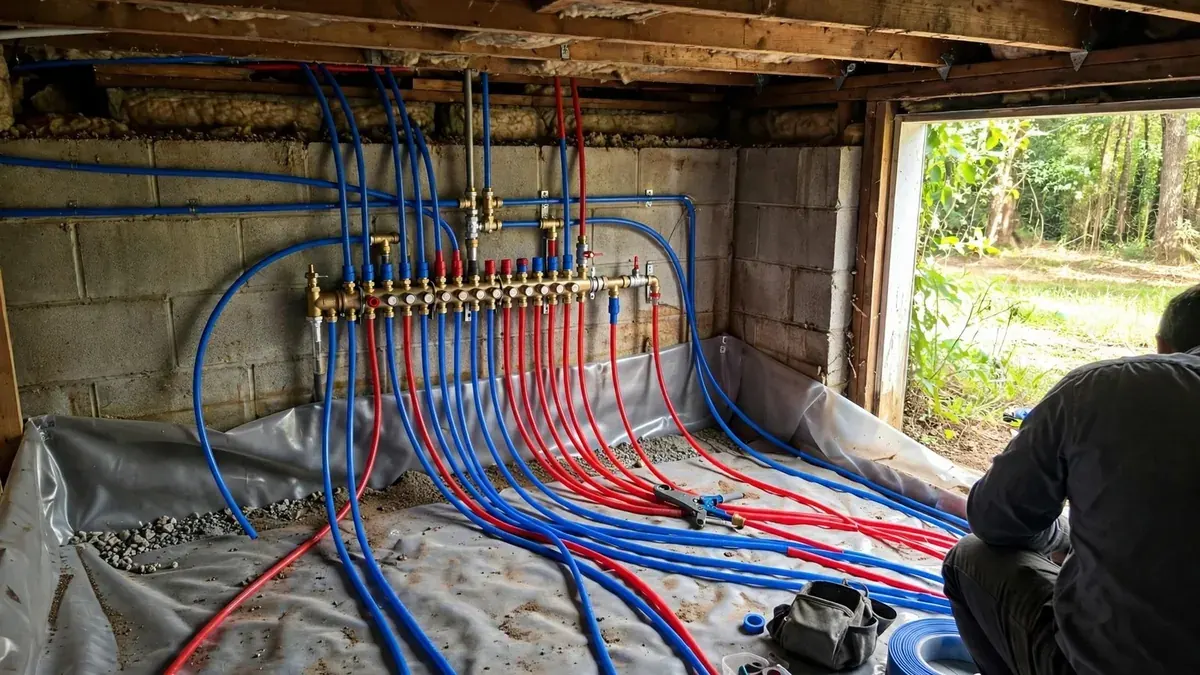
A PEX repipe replaces the water supply lines in your house with flexible cross-linked polyethylene tubing. Angi publishes a national range of about $1,500 to $15,000 for a whole-house repipe, with an average near $7,500. Those numbers are national, not Woodburn, OR quotes, and they are not our prices.
The spread is huge because a two-bath ranch with open access costs far less than a two-story with finished ceilings. This guide breaks down what drives the price, which Woodburn homes tend to need a repipe, and how to compare bids without guessing. For a price on your own house, call (503) 974-3329 and we will give you a clear price before work starts.
Published national numbers worth knowing
These come from large cost guides. Treat them as a ballpark for planning, then ask for a bid on your actual house.
| Item | Published range | Source |
|---|---|---|
| Whole-house repipe | $1,500 to $15,000, average about $7,500 | Angi, also cited by Bob Vila |
| PEX tubing, per foot | $0.40 to $2 | Bob Vila |
| Copper pipe, per foot | $2 to $8 | Bob Vila |
Tubing is only part of the cost. Labor, fittings, wall repair and permits usually add much more than the pipe itself. Spot-check the live pages before relying on any figure.
Five things that move a repipe quote
- Size of the house and the number of bathrooms, kitchens and hose bibbs to feed
- Access: open attic and crawlspace are cheaper than finished ceilings and slab foundations
- Material choice, since PEX generally costs less per foot than copper
- Wall and ceiling repair afterward, which can be a separate trade or a separate line item
- Permit and inspection fees through Marion County, and whether other plumbing work is added at the same visit
Why PEX wins on many repipes
PEX bends around corners, so a crew can pull it through walls with fewer cuts and fewer fittings. Fewer joints means fewer places for a leak to start. The tubing also tolerates some freezing better than rigid pipe, though a freeze can still split a fitting.
It is not perfect. PEX should not sit in direct sunlight, which degrades it, and some brands and fittings differ in quality. Look for tubing and fittings marked as meeting the relevant ASTM and NSF standards, and ask your plumber which system they install.
Copper is still a sound choice for some homeowners. It is rigid, has a long track record and resists UV. It costs more per foot and takes longer to install, which raises the labor line.
Signs your Woodburn house may be due
Woodburn's median home was built in 1978, and about 55 percent of the city's 9,894 housing units predate 1980. About 11 percent were built before 1960. Pipes from those eras can include galvanized steel, which clogs from the inside, and in some houses from the late 1970s into the 1990s, a gray plastic called polybutylene that is known to fail.
So the question is not only how old your house is. It is what the supply lines are made of and how they are behaving. Brown water, weak pressure at several fixtures, repeated pinhole leaks and green crust on copper joints are all repipe flags.
- Rust-colored water that clears slowly after you run the tap
- Pressure that has dropped at fixtures far from the main
- A second or third leak within a year or two
- Visible corrosion or mineral crust at joints
- Gray plastic pipe with a stamped code, a possible polybutylene sign
One note: the City of Woodburn runs annual main flushing, mostly in the winter, which can make water look rusty for a short while. That is normal and passes in a few minutes of running cold taps, so check the pattern before blaming your pipes.
Woodburn local note: housing age, lead survey and permits
Census data show Woodburn's median structure was built in 1978, with 9,894 housing units and 724 mobile homes. Those counts are survey estimates with margins of error.
The City's inventory counted 7,709 service lines with no lead lines found, and many customer-side lines are galvanized steel. The City asks residents of homes built in 1986 or earlier to call 503-982-5380 for its lead and copper plumbing survey.
Oregon's Building Codes Division lists altering piping inside walls, ceilings or under floors as work that needs a plumbing permit. In Woodburn, plumbing permits and inspections go through Marion County, so confirm project specifics with the county.
How a typical PEX repipe goes
- 1Walkthrough and planThe plumber counts fixtures, checks access and picks a route for the new lines. This is the visit that should produce your written price.
- 2Permit and schedulingPiping inside walls triggers a permit, so the plumber or contractor arranges it with Marion County and plans the inspection.
- 3Water shutoff and rough-inThe main is shut off and new lines run to each fixture, usually through attic or crawlspace first. Most families lose water service for part of a day or more.
- 4Connections and testingFixtures are reconnected, the system is pressure tested and checked for leaks, and the inspector signs off.
- 5Patch and finishAccess holes are closed. Painting and texture matching may be handled separately, so ask who does it before you sign.
Repair now or repipe: a quick way to decide
A single leak in an otherwise sound system is a repair job. A pattern of leaks, rust-brown water and poor pressure suggests the whole network is wearing out. A burst pipe repair gets you through today, but a repipe stops the cycle.
Think about timing too. If you plan to remodel a kitchen or bath with open walls, repiping at the same time can cut labor, since the walls are already open. Our repiping page covers the process, and plumbing installation covers fixture work that can ride along with it.
Folks in Hubbard and Silverton face a similar mix of older lines and newer additions. Just tell us the age of your house when you call.
Questions to put on every bid
Ask what pipe and fittings are used, whether the price includes permit fees, who patches the walls, how many days the water will be off, and what the workmanship warranty covers in writing. A bid that is far lower than the rest may be skipping drywall repair or the permit. Check any contractor's license with the state before signing, since plumbing work needs both a CCB license and a BCD plumbing contractor license.
Questions about this topic
Many houses take a few days from start to final inspection, though size and access decide it. Ask for a schedule that shows when your water will be off.
It can remove a red flag for buyers and insurers, especially if the old pipe was polybutylene or heavily corroded. Whether it adds a specific dollar amount depends on your market, so ask a local agent.
Usually not for worn-out pipes. Coverage may apply to sudden water damage from a burst pipe, and policies vary, so call your insurer before work starts.
Not automatically. Homes from that era often have galvanized or copper supply lines that still work fine. Look for rusty water, falling pressure and repeat leaks, then have a plumber check the actual material.
Yes. A hot-water-only or one-bathroom section is sometimes practical, though mixing old and new pipe can leave corrosion at the connection. Ask how the transition is made.
Dealing with this at home right now? Call any hour and a person picks up.
Call (503) 974-3329Guidelines here are general. The Oregon Plumbing Specialty Code, based on the UPC, and the manufacturer's instructions decide what is allowed on your job.