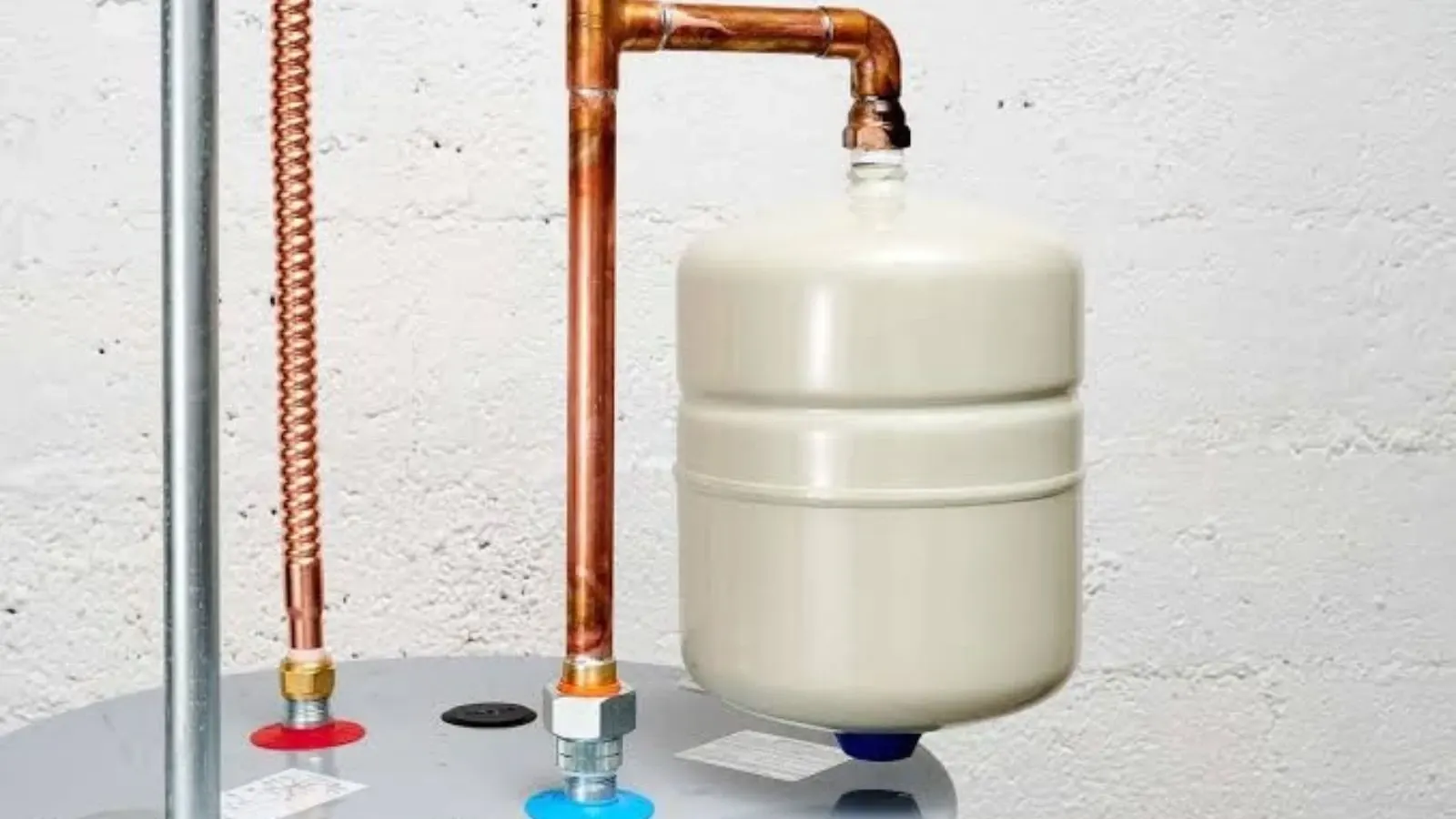
If you have no water pressure after a water heater replacement, the cause is almost always something small that changed during the swap. A shutoff valve left partly closed, trapped air, a kinked flex connector or debris knocked loose into faucet screens are the usual suspects. Real damage to your pipes is much less common.
Start with the cheap checks below, in order. If hot water is weak but cold is fine, the problem sits at or after the heater. If both are weak, look at the main shutoff and the house supply. When you are stuck, call (503) 974-3329 and a Woodburn plumber can trace it.
Symptoms and likely causes
Where the weak flow shows up tells you where to look first.
| What you notice | Most likely cause | First thing to check |
|---|---|---|
| Hot water weak, cold water normal | Partly closed heater inlet or outlet valve, or a kinked connector | The valves and flex lines on top of the heater |
| Both hot and cold weak, whole house | Main shutoff or meter valve not fully open | The main shutoff where the water enters the house |
| One faucet weak, others fine | Clogged aerator or cartridge with debris | Unscrew and rinse the aerator |
| Sputtering and spitting air | Air trapped in the pipes after the tank was drained | Open the hot taps and let the air bleed out |
| Slow flow and rusty or gritty water | Sediment or scale knocked loose during the swap | Aerators, shower heads and the heater drain |
| Pressure fine at first, then falls | A clogged screen or a failing pressure reducing valve | Call a plumber to test the pressure at an outdoor spigot |
Check these in order before you call anyone
Each step takes a few minutes. Turn off the heater's power or gas control if you need to touch plumbing near it, and never open a pressure relief valve discharge pipe by hand for this.
- 1Check the main shutoffFind where water enters your home and make sure the handle is fully open. A gate valve needs several full turns counterclockwise, and a ball valve lever should line up with the pipe.
- 2Check the heater's own valvesThe cold inlet valve on top of the heater should be fully open, and so should any valve on the hot outlet. A half-open valve is the number one cause of weak hot water after an install.
- 3Look at the flex connectorsThe braided steel lines on top of the tank can kink if they were bent sharply. Straighten any tight bend and look for a flattened spot.
- 4Bleed the trapped airOpen the faucet nearest the heater and the one farthest away. Let hot water run until it flows steady without spitting, which can take a couple of minutes.
- 5Clean the aeratorsUnscrew the tip of each faucet, rinse out the screen, and check for tiny bits of scale or pipe flakes. Do the same for shower heads, since they hold grit too.
- 6Check for sediment at the heaterGritty water coming out of only the hot taps points to something inside the tank or its connections. Do not drain the heater while it is on.
- 7Test the pressureAn inexpensive hose-thread gauge on an outdoor spigot shows pressure. Most homes run about 40 to 80 PSI, and a reading below 30 suggests a supply or regulator issue.
Why trapped air happens and how to get it out
When a tank is drained and replaced, the hot water lines go empty and fill with air. As new water enters the system, that air is pushed ahead of it and collects in high points like upstairs bathrooms and long pipe runs. The result is spitting faucets and low flow until the air escapes.
Open the highest faucet in the house first, then work down to the lowest. Run the hot side only, and leave each tap open until the stream is steady. If the sputtering comes back an hour later, there may be a loose fitting pulling air in or a partly closed valve that needs a second look.
Debris and aerators: the quiet culprit
Whenever a plumber shuts off and refills a home's water, the sudden flow can stir up mineral flakes and bits of old pipe that were resting in the lines. Those particles lodge in the small screen of a faucet aerator or in a shower head, and that is where the pressure disappears. The faucet is not broken, only plugged.
If one fixture is the problem, a ten minute cleaning usually fixes it. A stubborn cartridge or a corroded valve is when a faucet repair makes sense, since the parts inside wear out and trap grit.
Install mistakes that leave pressure low
If the water heater was installed by a handyman or as a DIY job, these are common slips.
- A valve on the cold inlet that was never fully reopened after the swap
- A flex connector kinked while the tank was being pushed into place
- A new expansion tank mounted but not charged to the house pressure, or a closed check valve behind it
- Undersized fittings that reduce flow on the hot line
- A pressure reducing valve that is failing or set too low, which affects the whole house
- A partly closed isolation valve on a recirculation loop, if the house has one
None of these require tearing into walls. They are all found at the heater or at the point where the water enters the house.
Woodburn local note: city water, flushing and older service lines
Woodburn's water is groundwater from the Troutdale Aquifer, treated at three city plants that filter out iron, manganese, arsenic and radon. The city flushes its mains every year, mostly in winter, which can stir iron and make tap water look rust-colored for a short time. The city says this is safe and suggests running cold taps for a few minutes. If your water heater swap happened in that window, discolored water and clogged aerators may be flushing related.
The city's own lead service line inventory also found that many customer-side lines are galvanized steel. Galvanized pipe can corrode from the inside over decades and narrow the opening, which restricts flow at the house even when the city's pressure is fine. If low pressure existed before the new heater, ask a plumber to check the house supply line.
When to call a plumber, and what a plumber checks
Call if the pressure is low across the whole house, if hot water is weak after you have checked every valve, or if you see a leak at a connector. Call right away for any water coming out of the relief valve line, a hissing noise from the tank or a gas smell near the heater. Our water heater installation team can walk the line from the street valve to the tank and test each point.
Oregon's Building Codes Division lists a permit for water heater replacement, and a contractor may use a minor label. If the unit was swapped without one, ask Marion County about it, since an inspection also checks the relief valve, venting and seismic strapping. Expect a plumber to measure pressure with a gauge, inspect the expansion tank, and test flow at several fixtures.
What a fix might cost
Most of the quick fixes in this guide cost nothing but your time. A professional visit to correct a valve or connector is typically a small job. Angi and HomeAdvisor publish a national range of about $600 to $2,500 for replacing a tank water heater, which is the context if your problem turns out to be a bad install and the whole unit needs to be redone.
These are national figures and not Woodburn quotes. Call (503) 974-3329 and we will give you a clear price before work starts. If you are in Gervais or Silverton, we can still help, since we cover both from our Woodburn address.
Questions about this topic
That points to the hot side only, so look at the heater's inlet and outlet valves, a kinked connector, or a clogged aerator. A new heater with a partly closed cold valve will pass less water to the hot lines.
A few minutes of running the hot taps usually clears it. If air keeps coming back after an hour, a fitting may be sucking air or a valve may be restricting flow.
It can, if a main or inlet valve was left partly shut or an expansion tank is blocking flow. Pressure that is low at every faucet should also lead you to check the main shutoff and the house pressure regulator.
It can be. The city flushes its mains each year, mostly in winter, and the iron stirred up is described by the city as safe. Run the cold taps a few minutes. If water stays brown or the hot side only is dirty, call us to look at the tank and connections.
Not always, but it is a common sign of a partly closed valve or a kinked line. A quick check usually shows it. If the install was done without a permit or inspection, ask Marion County what is needed.
Dealing with this at home right now? Call any hour and a person picks up.
Call (503) 974-3329Guidelines here are general. The Oregon Plumbing Specialty Code, based on the UPC, and the manufacturer's instructions decide what is allowed on your job.