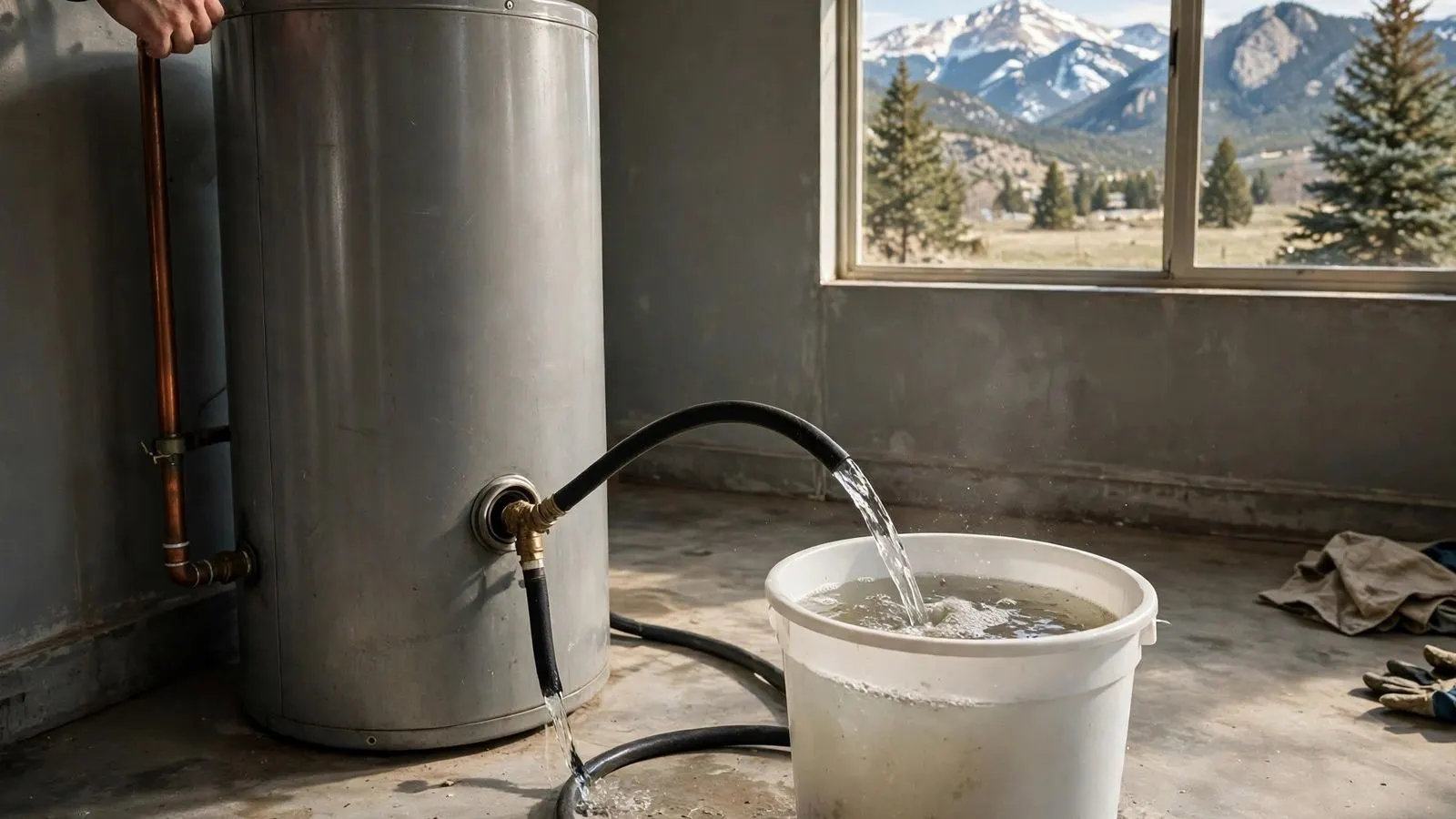
To flush a tank water heater, shut off its fuel or power, close the cold supply, hook a hose to the drain valve, open a hot tap, and let the tank empty until the water runs clear. Most manufacturers suggest doing this about once a year, but your manual sets the real schedule. The job takes under an hour for most people and needs only a garden hose and a bucket.
A flush helps with popping or rumbling noises, slow recovery and some drops in hot water, all signs of sediment sitting on the tank floor. It does nothing for a leak, a failed heating element or a tank that has rusted through. This guide covers the steps, the safety rules, and how to tell when a flush will not help.
Why sediment collects in a tank
Water carries dissolved minerals and tiny particles. Heating the water makes minerals drop out as scale, and the loose grit settles to the bottom of the tank. On a gas heater, that layer sits between the burner and the water, so the burner works harder and the tank bottom can get hot and noisy. On an electric heater, sediment can bury the lower element and shorten its life.
Where your water comes from changes how much sediment you see. Woodburn's water is groundwater from the Troutdale Aquifer, treated at city plants to remove iron, manganese, arsenic and radon. No Woodburn hardness number appears in the city's water reports we reviewed, so we cannot tell you your scale rate. Test your tap with a store-bought kit, and ask the City for its annual water quality report.
Signs your tank may need a flush
- Popping, rumbling or crackling when the heater runs.
- Hot water that runs out faster than it used to.
- Cloudy, gritty or rust-tinted hot water that clears when you run it.
- A heater more than a year past its last flush, with no records to check.
- A burner that runs longer than usual to reach temperature.
How to flush a tank water heater, step by step
Set aside the heater for an hour and make sure the hot water will not be needed. Wear closed shoes and gloves, since the drained water can be hot.
- 1Turn off the energy sourceFor electric, switch off the breaker. For gas, set the control to pilot or off. Never leave an electric element powered while the tank is empty, since it burns out in air.
- 2Close the cold water supplyShut the valve on the cold line above the heater. The heater is now isolated from the house.
- 3Connect a hose to the drain valveAttach a garden hose to the drain valve near the bottom of the tank. Run the other end to a floor drain, a utility sink or outside, downhill from the heater.
- 4Open a hot tapOpen a hot faucet somewhere in the house. This lets air into the system so the tank can drain.
- 5Drain until the water runs clearOpen the drain valve and let the tank empty. Expect gritty or cloudy water at first. Brief bursts of cold water from the supply valve can stir up the last of the sediment.
- 6Close and refillShut the drain valve, remove the hose, open the cold supply and let the tank fill. Keep the hot tap open until water flows steadily, which means the tank is full of water.
- 7Restore power or gasOnly after the tank is full, switch the breaker back on or relight the pilot following the label. Check the drain valve and fittings for drips.
What the symptom may mean
A flush is a good first step for the first row only.
| What you notice | Likely cause | Does a flush help? |
|---|---|---|
| Rumbling or popping | Sediment on the tank floor | Often yes |
| Short hot water supply | Sediment, a failed element or a worn dip tube | Sometimes |
| Rusty hot water only | Corroding tank or anode rod worn out | No, call a plumber |
| Water at the base of the tank | Leaking tank or fitting | No, call a plumber |
| No hot water at all | Pilot, igniter, element or thermostat | No, needs a diagnosis |
Safety rules before you touch the drain valve
Hot water can scald within seconds, so let the tank cool for an hour if it recently ran, or draw hot water out first. Turn off gas or power before you start. If you ever smell gas, leave the house and call your gas utility from outside.
Do not force a stuck drain valve. Many are plastic, and a cracked valve starts a leak you cannot stop without shutting the main. If the valve will not open or will not close, stop and call a plumber.
When flushing will not help
A flush clears loose sediment. It does not repair corrosion, and it will not fix a failing part. If the tank leaks, water is pooling around it, or it is around 15 years old, a flush may not be worth the effort. One extra hazard is hardened sediment, which can block the drain valve and leave you with a half-drained tank.
At that stage, get a diagnosis from a licensed plumber. Our water heater repair page lists what we check, and replacement covers the swap when a repair does not make sense. Angi and HomeAdvisor list national tank replacement at about $600 to $2,500, which is not a Woodburn quote. We give a clear price before work starts. Call (503) 974-3329.
Woodburn local note: city flushing, water reports and permits
The City of Woodburn flushes its water mains each year, mostly in winter. It can stir naturally occurring iron so water looks rust colored. The city says that is safe and asks people to run cold taps a few minutes. If you see rust tint after city flushing, try this before blaming your heater.
The city draws its water from six active wells in the Troutdale Aquifer and treats it at three plants. Its latest report we found is the 2024 Water Quality Report, which does not list a hardness figure. Ask the city for any newer report.
Oregon's Building Codes Division says a permit is required to replace a water heater, though not to flush one. Inside Woodburn, plumbing permits come from Marion County.
Do not borrow a neighbor's schedule
Nearby towns use different water. Hubbard, about 4 miles north of our Woodburn office, takes groundwater from the Troutdale Formation through four city wells. Silverton, about 11 miles away, draws mainly from Abiqua Creek, which is surface water.
Different sources can mean different sediment loads, so the right flush schedule for a house in one town may not suit another. Check your own heater's manual, note what comes out the first time you flush, and adjust.
Questions about this topic
Many manufacturers suggest once a year. If the first flush brings out a lot of grit, flush more often. If it runs clear, a yearly flush is usually enough. Your manual governs.
The City's water reports we reviewed give no hardness value. Use a store-bought test kit on your own tap, and ask the City of Woodburn for its annual water quality report.
No. Tankless units are flushed through isolation valves with a pump and a mild descaling solution. Follow the maker's steps or call a plumber.
Sometimes, but rust only in the hot line often points to a corroding tank. Rust in both hot and cold taps after city main flushing usually clears after running cold water for a few minutes.
No. A leak means the tank or a fitting has failed. Shut off the cold supply and power, then call a plumber.
Dealing with this at home right now? Call any hour and a person picks up.
Call (503) 974-3329Guidelines here are general. The Oregon Plumbing Specialty Code, based on the UPC, and the manufacturer's instructions decide what is allowed on your job.