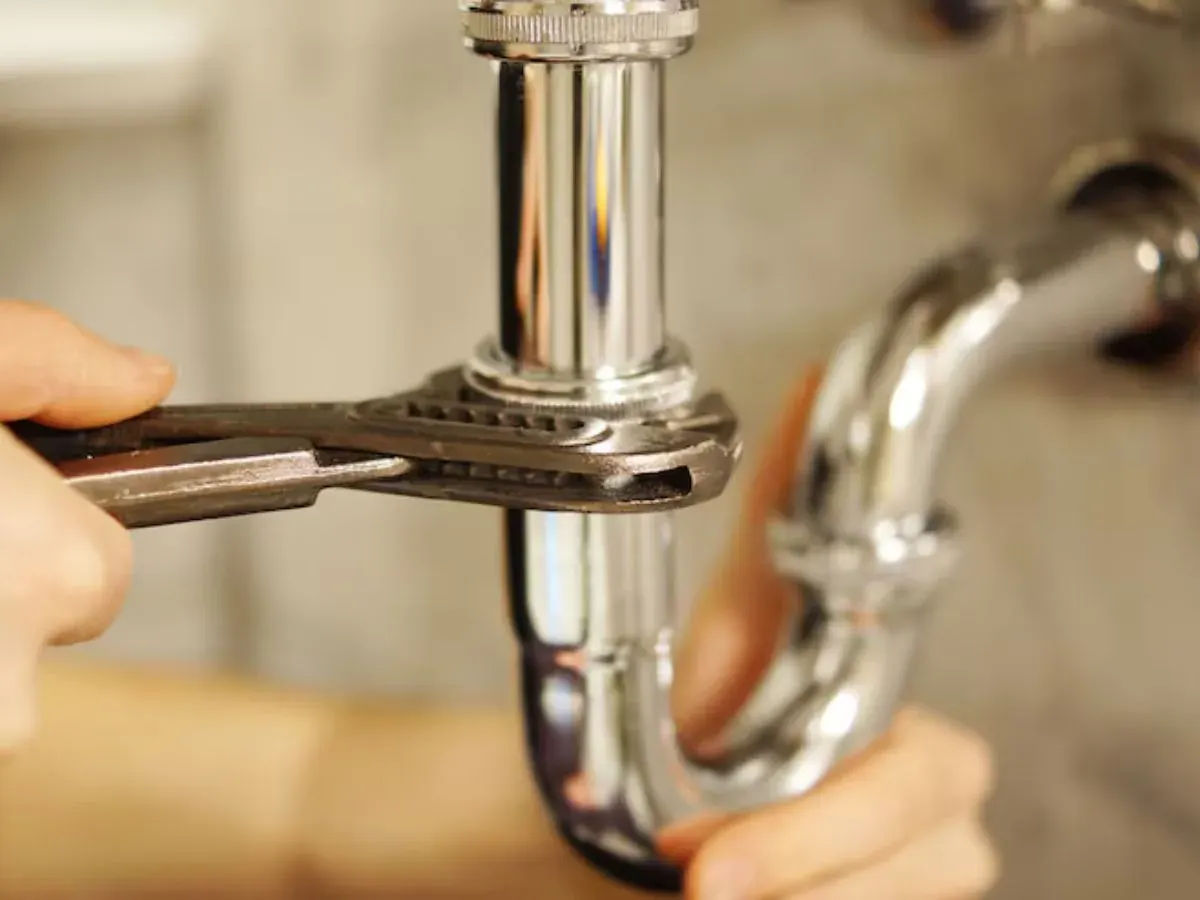
A P-trap is the U-shaped bend of pipe under a sink drain. After water runs down, a small amount stays in the bend and acts as a seal. That seal stops sewer gas from rising up through the drain into your Woodburn, OR kitchen or bathroom.
Most trap trouble falls into three groups: a clog, a slow leak at a nut, or a bad smell. You can handle the first two with a bucket and a pair of hands in about 30 minutes. The smell can come from a dry trap or a deeper problem, so this guide also shows how to tell which, and when to stop and call.
How the trap does its job
The trap holds water in the low point of the bend, typically a couple of inches deep. Every time you use the sink, fresh water pushes the old water out and a new seal forms. The vent pipe in your wall lets air in behind the water so the seal does not get sucked away.
That is why a trap can fail even when it looks fine. If the vent is blocked, draining water can siphon the seal out and you hear gurgling. If a sink goes unused for weeks, the seal evaporates and sewer smell can drift up.
- Seal holds: no odor, quiet draining.
- Seal siphoned: gurgling, slow drains, smell after use.
- Seal evaporated: smell from a sink or floor drain that rarely gets used.
Signs the trap is your problem
- Water pools in the sink and drains slowly, but only that one sink
- A musty or rotten-egg smell that gets stronger near the cabinet
- Drips or a damp cabinet floor under the bend
- A ring, earring or small item went down the drain
- Gurgling after the water drains away
- A trap that is cracked, corroded or has pinholes, especially on older chrome or metal ones
How to clean a P-trap
Plan on gloves, a bucket, a rag and a flashlight. Skip chemical drain cleaners first, since they can sit in the trap and splash on you when you open it.
- 1Clear the cabinet and set a bucketRemove what is under the sink and place the bucket directly beneath the bend. The trap holds water and gunk, and some will spill.
- 2Loosen the slip nutsTurn the two big nuts on either end of the U by hand, counterclockwise. If they resist, use channel-lock pliers but go gently, especially with plastic.
- 3Pull the trap and empty itLet the water drain into the bucket. Look inside for hair, grease, soap scum or a lost ring, and clear it with a bottle brush or an old toothbrush.
- 4Check the washers and the stub pipesInspect the rubber or plastic washers for cracks or flat spots. Peek into the pipe going into the wall for buildup you can reach.
- 5Reassemble and testSlide nuts on first, then washers with the beveled side facing the joint, and hand-tighten plus a quarter turn. Run water for a minute and check every joint with a dry paper towel.
Plastic or metal: choosing a replacement trap
If the trap is cracked or corroded, replace it. Match the pipe diameter first. Bathroom sinks usually take a 1 1/4 inch trap and kitchens a 1 1/2 inch trap.
| Material | Pros | Cons |
|---|---|---|
| White PVC or polypropylene | Cheap, easy to cut and fit, will not corrode | Can crack if overtightened, looks plain under open vanities |
| Chrome-plated brass | Looks good under pedestal sinks, durable | Costs more, plating can wear and the brass can corrode over time |
| Flexible accordion trap | Easy to line up odd drain positions | Ridges catch hair and gunk, and many plumbers avoid them |
Look for traps that meet the standard marked on the packaging, and keep the old one to match thread sizes at the store.
Woodburn local note: permits, code and who to verify
Oregon's Building Codes Division lists no plumbing permit for repairing or replacing a sink, toilet, exposed faucet, showerhead or hose bibb. That covers a simple trap swap, but the BCD says to confirm project specifics with the local building department, which in Woodburn means Marion County.
The statewide plumbing code is the 2023 Oregon Plumbing Specialty Code, effective October 1, 2023 and based on the 2021 Uniform Plumbing Code. If you hire a plumber, check that they hold both a CCB license and a BCD plumbing contractor license using the state's search tools.
Why a smell is not always the trap
If you replaced or cleaned the trap and the smell remains, look elsewhere. Run water for a minute in every unused sink, tub and floor drain, since dry traps are the most common cause. A basement floor drain that never gets water is a classic offender.
Persistent odors with gurgling at several fixtures can point to a blocked vent or a partial clog in the main line. A mild sewage smell in the yard or a backup in the lowest drain means stop and call. For lines that keep clogging, drain cleaning clears the branch, and a camera look shows the cause.
Two code-minded rules for any trap job
First, never double up traps. Two traps in series on one fixture, or an S-shaped trap that lacks a proper vent, can lock air in the line and slow drainage. Each fixture gets one trap and a vented drain.
Second, keep the horizontal run from the trap to the wall short and pitched slightly downhill. Too long a run, or a trap set too far below the drain outlet, can break the seal. If your layout seems odd, a quick call beats a cabinet full of water.
When to call a plumber
Call if the slip nuts will not budge, the pipe going into the wall is corroded, or leaks continue after reassembly. The same goes for a kitchen sink with a disposal, a double bowl layout that is hard to line up, or any sign of mold in the cabinet.
Angi and HomeAdvisor publish a national range of about $147 to $345 for a drain cleaning visit, with an average around $241. Those are not Woodburn quotes. Factors that change the price include how many fixtures share the line, how far the clog sits from the sink, and whether the trap or the wall pipe needs to be replaced. You get a clear price before work starts. Call (503) 974-3329.
If the leak turns out to be the faucet or a supply line, faucet repair is the better fit. People in Gervais and Silverton can call the same line.
Questions about this topic
Not usually. Slip joints seal with a beveled washer that compresses as you tighten the nut. Tape and putty rarely fix a bad washer, so replace the washer or the trap instead.
When the sink slows down or smells, not on a schedule. Keeping grease and coffee grounds out of the drain stretches the time between cleanings.
Gurgling means air is being pulled through the water seal, which usually points to a blocked vent or a partial clog farther down the line. A plumber can check both.
Oregon's permit page lists no permit for repairing or replacing a sink, but Woodburn plumbing permits come through Marion County. Check with the county if your project goes beyond a straight swap.
Usually it stops after you pour water down the drain and the seal re-forms. A few drops of cooking oil on top can slow evaporation in rarely used drains. If the smell stays, call us.
Dealing with this at home right now? Call any hour and a person picks up.
Call (503) 974-3329Guidelines here are general. The Oregon Plumbing Specialty Code, based on the UPC, and the manufacturer's instructions decide what is allowed on your job.