If sewage or dirty water is coming up in a Woodburn tub, shower or floor drain during heavy rain, stop using water in the house, keep people and pets away from it, and call a plumber. Our 24/7 emergency line is (503) 974-3329. Flushing, running the washer or taking a shower sends more water into a line that has no room for it.
A backup in the rainy season usually has one of three causes: roots, grease, or extra water getting into the line from outside. Each leaves a different pattern, and the pattern tells you whether the blockage is in your pipe or in the city main. This guide covers each cause, a safe first response, how to use your cleanout, what insurance may and may not cover, and when to stop and call.
Three causes behind a rainy-season backup
Roots. Tree and shrub roots slip into joints and small cracks searching for moisture. They thicken over time and snag toilet paper and waste. Wet winters can speed the growth, and a line that ran fine in summer can slow down in a few weeks.
Grease and debris. Cooking fat cools and hardens inside the pipe, narrowing it a little with each use. A line with a layer of grease may drain until rain or a heavy day of laundry pushes the load over the limit.
Infiltration. Groundwater and rain can seep into old pipe joints and cracked lines, and some systems get rain through improper connections. The extra flow fills the pipe, and if the main downstream is already near capacity, wastewater backs up at the lowest fixture. This one tends to appear only during storms and fade after.
Reading the pattern: yours or the city's?
Where the water shows up, and how many fixtures are affected, tells you a lot.
| What you see | What it points to | What to do |
|---|---|---|
| One slow sink or tub | Local clog in a branch drain | Plunge, then try a drain cleaning visit |
| Several fixtures slow, gurgling toilets | Partial blockage in your main line | Stop using water, call a plumber |
| Floor drain or lowest tub backs up | Main line blocked or overloaded | Stop using water, check the cleanout, call |
| Backup only in storms, clears afterward | Infiltration or an overloaded main | Call, and ask neighbors if they are affected |
| Neighbors also backed up | Possible city main problem | Report it to the city and still call a plumber |
What to do first when a drain backs up
Move calmly. A backup is a sanitation problem as much as a plumbing one.
- 1Stop sending water down the drainsNo flushing, showers, dishwasher or laundry. Every gallon you add has nowhere to go.
- 2Keep people and pets awayRaw sewage carries bacteria. Keep children and animals out of the wet area.
- 3Protect yourselfWear rubber boots and gloves for anything you must touch. Do not touch bare skin to the water, and wash well afterward.
- 4Shut off power to a flooded area if it is safeSwitch off the breaker only if you can reach the panel without standing in water. Otherwise, leave it and call.
- 5Look at your cleanoutIf you know where it is, check for standing water. This helps the plumber decide where the blockage sits.
- 6Call the 24/7 lineTell the plumber which fixtures are affected and whether it is raining. Call (503) 974-3329.
Using your cleanout the safe way
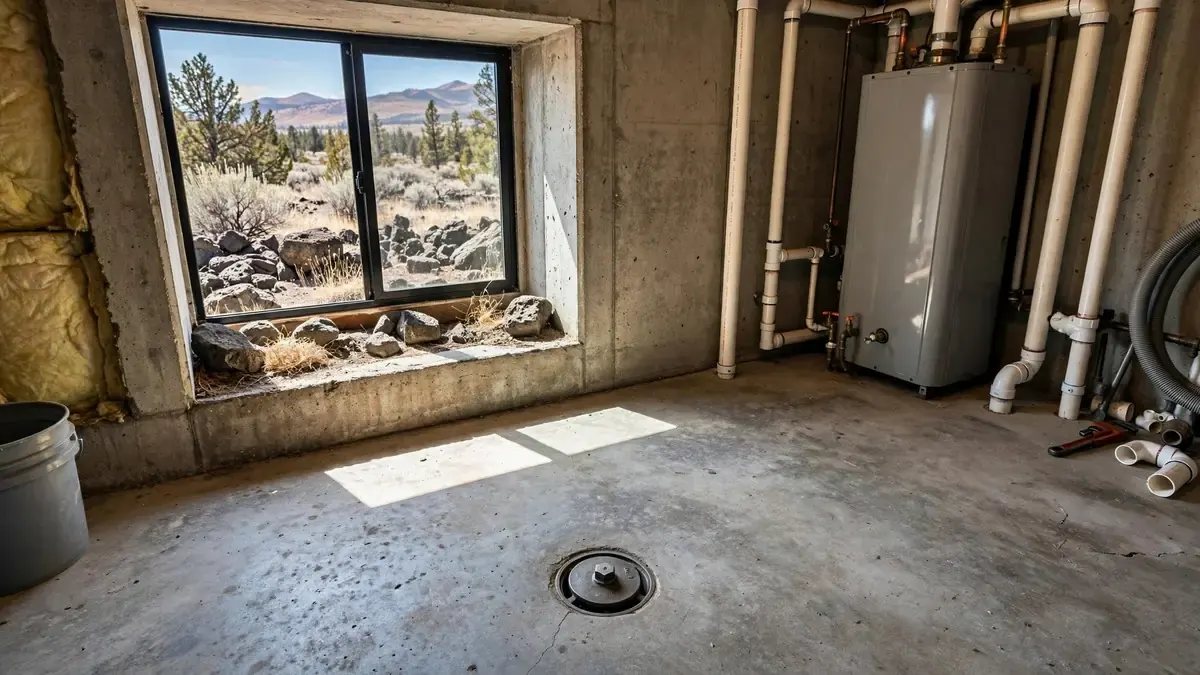
Most homes have a capped pipe, called a cleanout, on the main sewer line. It is often outside near the foundation, in a basement, or in a crawl space. It is an access point for a cable or camera.
If the line is backed up, the pipe can be full of wastewater under some pressure. Open the cap slowly and stand to the side, with a bucket and towels ready, and be ready to tighten it again. If water rises to the opening, the blockage is downstream, toward the street, so stop and call. If it stays dry, the blockage is probably upstream, in a drain inside the house.
If you cannot find the cleanout, do not dig. A plumber can locate it with a camera or locator.
A cleanout also lets a plumber run a cable or hydro jetting nozzle straight into the main without pulling a toilet.
Insurance honesty
Many standard homeowner policies exclude sewer and drain backup unless you add a rider, often called water backup coverage. Others cover only part of the loss. Policies differ, so read yours or call your insurer. We cannot tell you what your policy pays.
Take photos before you clean up, keep damaged items until the adjuster sees them, and ask the plumber for a written note of what was found. Renters should tell the landlord first, since the building owner's policy and the renter's policy cover different things.
Woodburn local note: rain, housing age and the city system
Salem's 1991 to 2020 climate normals, the nearest published station, show about 40 inches of precipitation a year in the mid Willamette Valley. The long wet season is when infiltration and root growth do the most harm to old lines.
Census survey data shows the median home in Woodburn was built in 1978, and about 55 percent of housing units were built before 1980. Older sewer laterals have had more time for joints to shift and roots to enter.
The City of Woodburn runs its wastewater treatment plant at 2815 Molalla Rd, which discharges to the Pudding River. The plant line is 503-982-5284, but confirm the number before you call. We did not find a city page on sewer backup steps or a grease program, so if you suspect the public main, ask the City directly.
What clearing the line can cost, and what keeps it clear
Angi and HomeAdvisor publish national drain cleaning costs of about $147 to $345, averaging around $241. Bob Vila, citing HomeAdvisor, lists camera inspection at roughly $100 to $500. If a camera shows a broken or root-invaded pipe, HomeAdvisor lists national sewer line repair at about $1,388 to $5,323. Those are national ranges, not Woodburn quotes.
We give a clear price before work starts. After a root-clogged main, a camera look with sewer inspection shows whether the pipe is sound or needs repair.
Keep grease out of drains, wipe pans before washing, and only flush toilet paper. If roots are the cause, expect to have the line cleared again unless the pipe is repaired. We cover Gervais, about 4 miles away, and Hubbard, about 4 miles away, as well as Woodburn.
When to call the 24/7 line
Call right away if sewage is coming up in a tub, shower or floor drain, if several fixtures gurgle or back up together, or if the water is near outlets or appliances. Our 24/7 line is open on nights, weekends and holidays, and we book same-day appointments when available.
A single slow sink can wait for a plumber during the day, but do not keep running water into it. For a slow drain without sewage, a drain cleaning visit may be enough. Call (503) 974-3329 and we will help you decide.
Questions about this topic
Rain-driven backups often point to groundwater or stormwater getting into old lines, or to an overloaded main downstream. Roots that have grown into a joint can also hold back flow only when the pipe fills. A camera inspection shows which one you have.
Do not. Chemical cleaners rarely reach a main line blockage, and the standing liquid becomes a hazard for the plumber and for you. Stop using water and call instead.
In most cases the homeowner is responsible for the pipe from the house to the public main, and the city for the main itself. Confirm with the City. A plumber can tell which side the blockage is on, and you can ask the City if neighbors are affected.
Jetting clears roots and grease from the pipe walls, but it does not repair the crack they came through. Roots usually return, sometimes within a year or two, unless the pipe is repaired or relined.
Often not unless you have water backup coverage. Check your policy and call your insurer before you throw anything away. We can document what we found, but we cannot say what the policy pays.
Dealing with this at home right now? Call any hour and a person picks up.
Call (503) 974-3329Guidelines here are general. The Oregon Plumbing Specialty Code, based on the UPC, and the manufacturer's instructions decide what is allowed on your job.