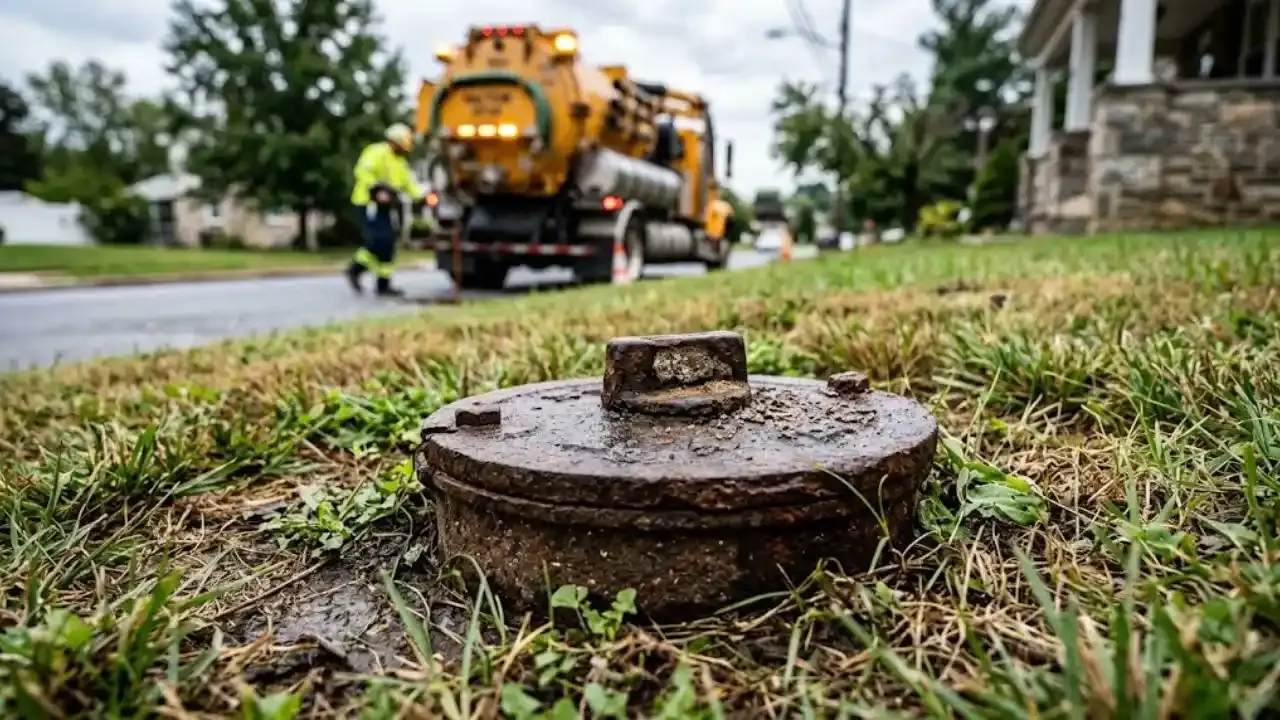
A store-bought main sewer line clog cleaner rarely solves a true main line blockage. Liquid products are made for a hair clog in a sink trap or a soap clog in a tub drain. The main line is a 4 inch pipe that carries every fixture's waste out to the street, and a bottle poured into one toilet mostly dilutes in the water standing there.
If sewage is coming up in a tub, a shower or a floor drain, skip the chemicals and stop using water. Call (503) 974-3329 and a licensed plumber can clear the line and look inside it. The rest of this guide covers how to tell a main clog from a local one, what cleaners really do, and what you can safely try first.
Signs the clog is in the main line, not one drain
A single slow sink points to that sink's trap or branch. A main line problem shows up in more than one place at the same time.
- Two or more fixtures drain slowly or back up together, such as a tub and a toilet.
- The lowest drain in the house (a basement floor drain or a first-floor shower) gurgles or fills first.
- Flushing a toilet makes a different fixture bubble or burp.
- Running the washing machine sends water up a floor drain or into a tub.
- A sewer smell comes from drains even after you clean the trap.
If you see two or three of these, treat it as a main line problem. The blockage sits downstream of all the branch drains, so pouring anything into a single fixture cannot reach it.
What drain cleaners actually do
Most chemical cleaners fall into three groups. Caustic cleaners use lye (sodium hydroxide) to turn grease and soap into a soapy slurry. Acid cleaners, usually sold to professionals, eat through organic material fast. Oxidizing cleaners release heat and gas to break up hair and residue.
All three need to sit in contact with the clog, and all three work best in a small pipe where the product stays concentrated. In a 4 inch main with standing water in it, the product spreads out and weakens. It may never touch a blockage that is thirty feet downstream.
- They can help with: a hair and soap clog just below a sink, tub or shower drain.
- They struggle with: tree roots, a collapsed or offset pipe, a pile of wipes, a toy, or grease packed hard in a long run.
- They cannot do anything about: a bellied (sagging) section of pipe that holds water and waste.
Roots are a good example. A root mass is living wood, and a chemical that dissolves hair does little to it. Some root killers exist, but they are slow and they do not remove the clog or repair the crack the roots came through.
Chemical safety: why the bottle can make things worse
When a main line is fully blocked, the cleaner you pour in has nowhere to go. It sits in the toilet bowl, tub or floor drain, and the next person who plunges or snakes the line can get a splash of caustic liquid. Lye burns skin and eyes, and it can damage a toilet's rubber seals and old metal traps.
Never mix products. Bleach combined with an acid cleaner or with an ammonia product can release toxic gas, and two different drain cleaners can react violently. If a cleaner has already gone in, tell the plumber when you call so they can wear the right gloves and eye protection. Keep the room ventilated and keep children and pets away from the fixture.
What you can safely try before calling
These steps are low risk and cost nothing. Stop at the first sign that sewage is coming up, because forcing more water into a blocked main only pushes it into your house.
- 1Stop using waterPause the dishwasher, washing machine, showers and toilets. Every gallon you send down goes to the lowest open drain.
- 2Find the cleanoutLook for a capped 3 or 4 inch pipe near the foundation, in a yard, or in a crawl space or basement. Many homes have one, and it gives a plumber direct access to the main.
- 3Try a plunger on a single toiletIf only one toilet is slow and nothing else is, a flange plunger may clear it. If the water rises in a tub when you plunge, the clog is farther down.
- 4Do not open the cleanout cap yourself if sewage is backing upA full line can pour out fast when the cap comes off, and that puts raw sewage in your yard or crawl space. Leave it for the plumber.
- 5Call for helpCall (503) 974-3329. Tell us which fixtures are affected, whether you used any chemicals, and if there is a cleanout you can reach.
Store-bought options compared with professional clearing
Here is a plain comparison of the usual choices for a blocked drain, from a bottle to a camera.
| Method | Good for | Limits |
|---|---|---|
| Liquid or gel chemical cleaner | Hair and soap in a sink, tub or shower trap | Cannot reach a main line clog, burns skin, can harm old pipes and seals |
| Hand auger or 25 foot drain snake | A clog within a sink or tub branch | Too short for most mains, can kink in a long line |
| Rented or truck-mounted cable machine | Roots, packed debris, and wipes in a main line | Needs training, because a cable can tear a cracked pipe |
| Hydro jetting | Grease, scale and heavy buildup on the pipe wall | Not right for a collapsed or badly cracked pipe |
| Camera inspection | Showing what the clog is made of and where the pipe is damaged | A diagnosis, so it is paired with clearing or repair |
Angi and HomeAdvisor publish a national drain cleaning range of about $147 to $345, and camera inspections often run about $100 to $500 according to Bob Vila citing HomeAdvisor. These are not Woodburn quotes. Call (503) 974-3329 and we give a clear price before work starts.
When to call, and what a plumber does that a bottle cannot
Call right away if sewage is coming up in a fixture, if several drains fail together, or if a cleaner did not help within an hour. A blocked main is also a health issue, because wastewater on a floor carries bacteria. Our plumbers can run a cable through the cleanout to break up the clog and confirm the line is moving.
After the line is open, a camera shows why it clogged. If it was a one-time event, such as a wad of wipes, you are done. If it shows roots, a sag or a cracked joint, you can see it on screen and decide what to do next. A sewer camera inspection keeps you from paying for the same clog twice, and our sewer line cleaning crews can clear the line in the same visit.
- Jetting is a good follow-up if the camera shows grease or heavy scale on the pipe walls.
- Repair or replacement is needed when the pipe itself is broken, offset or sagging.
Woodburn local note: where your private line ends and the city's begins
Woodburn is on the city sewer system. The city runs its wastewater treatment plant on Molalla Road, which discharges to the Pudding River under a state permit.
The line from your house to the street is generally yours to maintain, so a clog on your property is a private plumbing problem. If you cannot tell whether a backup started in your pipe or the street main, say so when you call and the plumber can check the cleanout.
Census survey data shows Woodburn's median home was built in 1978, and about 55 percent of homes predate 1980. Drain lines from that era can be cast iron or early plastic, with rough joints where roots catch. If your home is in that group, ask for a camera look the first time a main backs up.
Keeping the main clear after it opens
Most repeat clogs come from what goes down the toilet and kitchen drain. Flushable wipes do not break down like toilet paper, and they snag on any rough spot. Grease cools and hardens in the slower sections of the line.
Wipe greasy pans with a paper towel before washing, and keep wipes, paper towels and cotton swabs out of the toilet. Neighbors in Hubbard and Gervais are on their own city systems, so confirm who handles your sewer before you decide who to call. If your drains are slow but not backing up, our drain cleaning service is the right first call.
Questions about this topic
You can, but it rarely reaches a real main line blockage. The product dilutes in the standing water and the toilet's trap, and a fully blocked line gives it nowhere to go. It also puts caustic liquid in a bowl that someone may plunge or snake later.
Walk the outside of the house near the foundation and look for a capped pipe, often white, black or tan, about 3 or 4 inches wide. Many homes also have one in a crawl space or at a basement wall. If you cannot find it, tell the plumber on the phone and we will look for it on arrival.
Generally, the city maintains the public sewer main in the street, and the homeowner maintains the private line from the house to that main. A camera can show which side the blockage is on. If the problem looks like it is in the street main, ask the City of Woodburn Public Works.
Dealing with this at home right now? Call any hour and a person picks up.
Call (503) 974-3329Guidelines here are general. The Oregon Plumbing Specialty Code, based on the UPC, and the manufacturer's instructions decide what is allowed on your job.