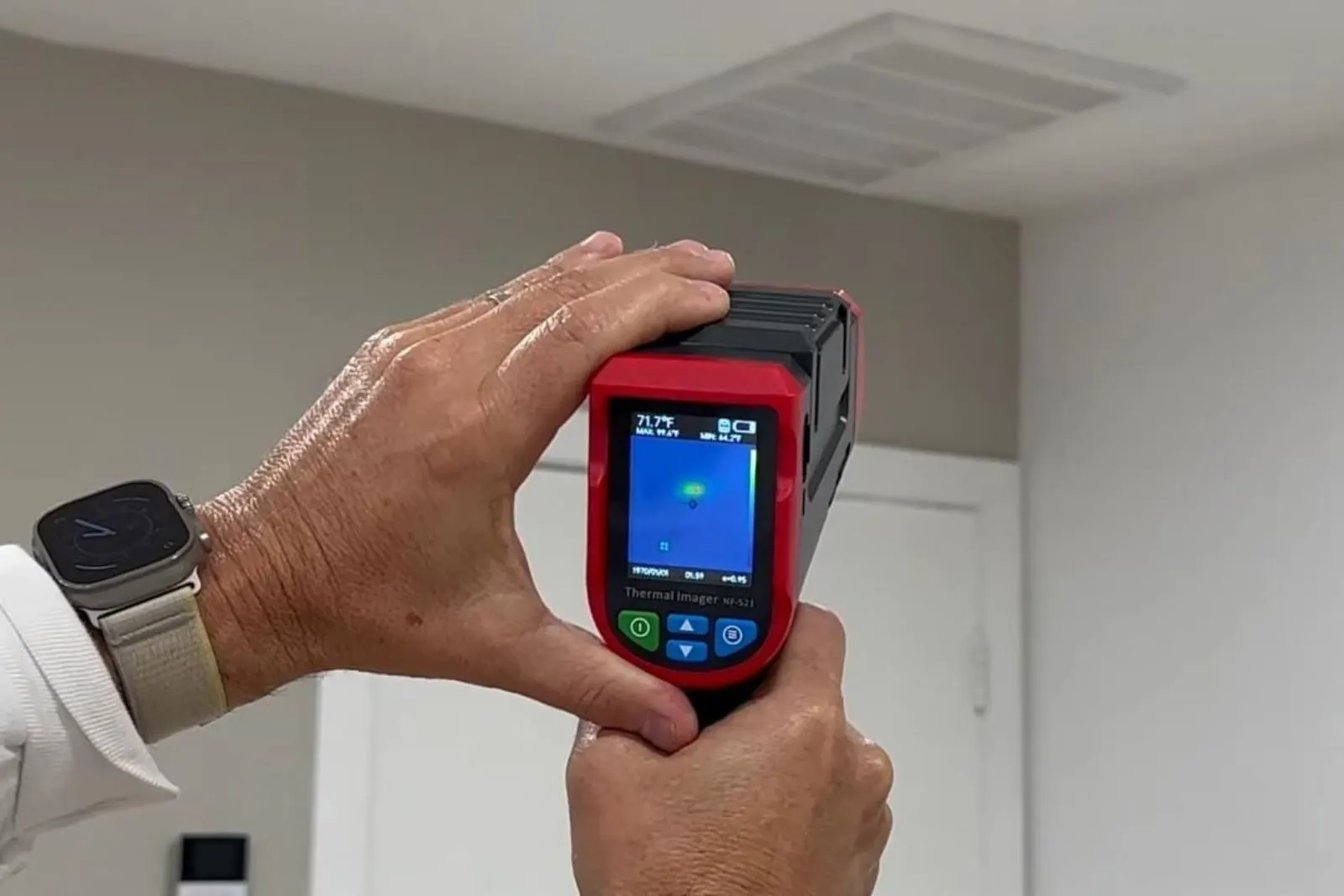
Infrared camera leak detection uses a thermal imager to spot surfaces that are warmer or cooler than the area around them. Wet drywall, a soaked floor or a leaking hot line can all show up as a different color on the screen. In a Woodburn, OR house, that can point you to a wall or ceiling worth opening, but it cannot see inside a wall and it cannot name the cause.
Think of the camera as a flashlight for temperature. It tells a plumber where to look next, then other tools confirm the leak. This guide covers what a thermal image can and cannot show, what to check at home first, and when a stain or a bill spike means it is time to call.
What a thermal camera actually sees
The camera reads the surface temperature of whatever it points at. It does not see through drywall, tile, concrete or insulation. What it picks up is the way water changes the temperature of that surface.
Wet materials usually look cooler than dry ones because water evaporates and pulls heat away. A leak on a hot line can instead create a warm patch. A crack in a heating or hot water pipe under a floor may light up as a bright stripe.
- Best for: wet ceilings below a bathroom, damp wall sections, saturated insulation, warm streaks from hot water lines.
- Helps with: deciding where to open a wall so you cut one hole instead of five.
- Gives a map of temperature differences, not a diagram of what is leaking.
What infrared can and cannot do
| Question | Thermal camera | Better tool |
|---|---|---|
| Is there moisture near this stain? | Often yes, if the water cools the surface | Moisture meter to confirm |
| Which pipe is leaking? | Rarely, it only shows a region | Acoustic listening gear or a pressure test |
| Is there a leak under a slab? | Only if hot water warms the slab surface | Listening gear, tracer gas or a line pressure test |
| Is a buried yard line leaking? | Not reliably, soil hides the signal | Meter test, then locating equipment |
| Is the water still active? | Cannot tell wet from actively leaking | Shut off and watch the meter |
A thermal image is only a clue. A plumber should confirm any finding with a second method before cutting into finished surfaces.
Check these before paying for any leak hunt
Plenty of leaks can be narrowed down at home with a flashlight and ten minutes. Start here.
- 1Watch the water meterTurn off every tap, the ice maker and the washer. If the meter dial still moves after a few minutes, water is leaving somewhere. If it holds still, the leak may be intermittent or on the drain side.
- 2Test the toiletsAdd a few drops of food coloring to each tank and wait 15 minutes without flushing. Color in the bowl means a silent flapper leak, which wastes water and is cheap to fix.
- 3Look under every sink and behind appliancesFeel supply lines, shutoffs and the dishwasher hose with a dry paper towel. Damp spots there are among the most common leaks in a house.
- 4Check the water heater areaLook at the base for rust or puddles, and at the relief valve pipe for drips.
- 5Read last month's bill against the one beforeA sudden jump with no change in habits is a prompt to run the meter test again.
Where thermal imaging misses leaks
Several situations fool the camera. A cold water leak inside a wall in a mild room may cause almost no temperature contrast. Thick insulation, tile or a concrete slab can mask a difference completely.
The reverse also happens. A cold window, a sunlit wall, an air vent or old condensation can look just like a leak. That is why good technicians check readings against a moisture meter and the layout of nearby plumbing.
Timing matters too. A wet patch from a leak that was fixed last month can still look cool today. The camera sees where it is wet, not whether water is still arriving.
Woodburn local note: shutoff valves and who to call for a city-side leak
Woodburn's city water comes from groundwater wells and is delivered by the City of Woodburn. The city tells customers to know where their shutoff valve is, and its Water Section can shut water off at the meter if you cannot stop a leak.
For a leak on your own service line, the city lists its Finance Department at 503-982-5222 option 1. For a leak in a city main, call the city, and after hours the Woodburn Police non-emergency line at 503-982-2340. The city asks people not to use 911 unless the leak is major.
Phone numbers can change, so confirm them on the city site before you rely on them.
Clues that point to which kind of leak you have
Different symptoms suggest different places to start, which keeps the search short.
Ceiling stain under a bathroom
Often a shower pan, tub drain or supply fitting above. Check the bathroom first, then think about the camera.
Warm spot on a floor
A hot line may be leaking under the surface. Shut the heater off and call, because the floor may be saturated beneath.
Meter moves, nothing visible
Suspect a hidden or underground leak. This is where burst pipe repair gets involved if a supply line has let go.
Musty smell, no stain
Check cabinets, crawlspaces and the garage wall. Mildew can grow long before a stain reaches the surface.
What a leak detection visit usually involves
A plumber typically starts with questions: where the stain is, when you first saw it and what the bill did. Then comes a meter test, a look at fixtures, and a moisture reading. If the walls hide the answer, a thermal scan narrows the search.
From there, acoustic gear listens to pipes for the hiss of escaping water, and a pressure test isolates a section of line. The goal is a small opening in the right place. Our leak detection service follows that order, and we do not publish a leak detection price because the scope varies so much from house to house.
A few factors shape the final bill: how big the house is, whether the pipes are accessible, how many tools it takes to pin down the source, and what repair follows. You get a clear price before work starts.
Why Valley winters and older plumbing matter here
The mid-valley sees about 40 inches of rain a year, and January lows average about 36 degrees F in the Salem area. Cold snaps can crack exposed pipes in crawlspaces and garages, and frost depth in Woodburn is set at 12 inches by the City. Pipes buried shallower than that are exposed.
Woodburn's housing stock leans older, with a median build year of 1978. Many city service lines on the customer side are galvanized steel, which corrodes from the inside and eventually pinholes. That is a good reason to run the meter test every year or two.
If you live in Mount Angel or Silverton, the same steps apply, and we cover both towns. Just tell us which one when you call so we can plan the trip.
When to stop investigating and call
- Water is coming through a ceiling, light fitting or electrical panel. Shut off power to that area first if you can do it safely, and stay clear of wet wiring.
- The meter runs fast and you cannot find the source.
- A wall or floor feels warm, soft or visibly bowed.
- You can hear running water with everything shut off.
- There is mold-like staining spreading across a surface.
Questions about this topic
It can show a cool or warm patch on the wall surface that suggests moisture behind it. It cannot see the pipe or confirm that a leak is active, so a moisture meter or a second test should follow.
Not always, and it is not the best tool for a cold water slab leak. A meter test, listening equipment and pressure testing often work better. Thermal imaging can help if a hot line is warming the floor.
Yes. The camera only receives heat radiation and sends nothing into your walls. The hazards in a leak situation come from water near wiring and from slippery or weakened floors.
Run the meter test with all water off. If the dial moves, you likely have a leak, and if your service line is the culprit, the city lists a Finance Department line for that. Then call us to find the source.
Coverage varies by policy and by cause, so read yours or call your agent. Many policies treat sudden damage differently from slow seepage over time, and photos taken before cleanup help.
Dealing with this at home right now? Call any hour and a person picks up.
Call (503) 974-3329Guidelines here are general. The Oregon Plumbing Specialty Code, based on the UPC, and the manufacturer's instructions decide what is allowed on your job.